




Affordability is on the ballot. Are your customer communications ready for what’s next?

By Paul Watkins
October 30, 2026 14 min read
Share this post
Affordability is on the ballot. Are your customer communications ready for what’s next?
news icon
Affordability is on the ballot. Are your customer communications ready for what’s next?

This November, energy affordability is more than a household concern. It is a defining issue in state and local elections, a growing focus for regulators, and an increasingly important part of the relationship between utilities and the customers they serve.

Nearly every candidate running for governor or public utility commissioner in the races analyzed for the 2026 election has addressed energy affordability on their campaign website. Of the candidates reviewed, 61 of 74 gubernatorial candidates and 30 of 33 public utility commission candidates have taken a position on the issue. Meanwhile, utilities have requested $23.1 billion in rate increases through the third quarter of 2026, the highest third-quarter total on record, according to the figures cited in recent industry reporting.1

The message is clear: customers, policymakers, and regulators are paying close attention to the cost of energy. And as affordability becomes a more prominent public issue, utilities will face increasing pressure to explain not just what customers owe, but why they owe it.

The challenge is that a bill rarely tells the whole story in a way customers can easily understand. When a monthly payment rises unexpectedly, customers may not know whether weather, changing rates, increased usage, or another factor is responsible. They may not know what to do differently, what assistance is available, or whether the next bill will be even higher.

For utilities, this creates an opportunity to rethink how they communicate about affordability. Clear, proactive communication cannot eliminate rising energy costs, but it can give customers greater visibility into those costs, more time to prepare, and practical options for managing their energy use and bills.

Affordability starts with understanding the bill

A higher utility bill is not simply a number on a statement. For a household working within a tight budget, it can mean changing spending priorities, delaying another expense, or worrying about how to cover the next month’s essentials.

The uncertainty surrounding a higher bill can make that pressure worse. Customers who do not understand what changed may struggle to determine whether their energy use increased, their rates changed, or an unusually hot or cold month drove up consumption. Without that context, it is difficult to know which steps might actually help.

This uncertainty can also erode trust. When customers repeatedly receive bills that are higher than expected without a clear explanation, frustration can turn into suspicion about how charges are calculated and whether their utility understands the financial impact on the household. Traditional billing statements are designed to communicate charges, usage, and payment information. But presenting the data is not the same as explaining it.

A customer may see that they used more kilowatt-hours than the previous month, but that information alone does not explain what it means for their budget. They need to understand how much the additional usage is likely to cost, what contributed to the increase, and whether changing their habits could make a meaningful difference.

For example, telling a customer that their energy consumption increased by 15% is a starting point. Explaining that unusually high air-conditioning use contributed to an estimated $25 increase, then offering practical ways to reduce cooling costs, gives that customer something more useful: context and a potential next step.

The goal is not to oversimplify a complex bill or promise savings that cannot be guaranteed. It is to translate billing information into clear, relevant guidance that helps customers make informed decisions.

Why proactive communication matters more than ever

One of the biggest shortcomings of traditional billing communication is timing. Customers often learn that their energy costs have increased only after the billing period has ended and the amount due has been calculated. By then, the opportunity to change consumption during that period has passed.

A customer who learns about a higher-than-normal bill three weeks after increased energy use began cannot go back and adjust their thermostat, investigate an inefficient appliance, or change when they use certain equipment. They can prepare for the payment or look for assistance, but they have already lost the opportunity to influence much of the bill.

Proactive communication changes that dynamic by giving customers information while there is still time to respond.

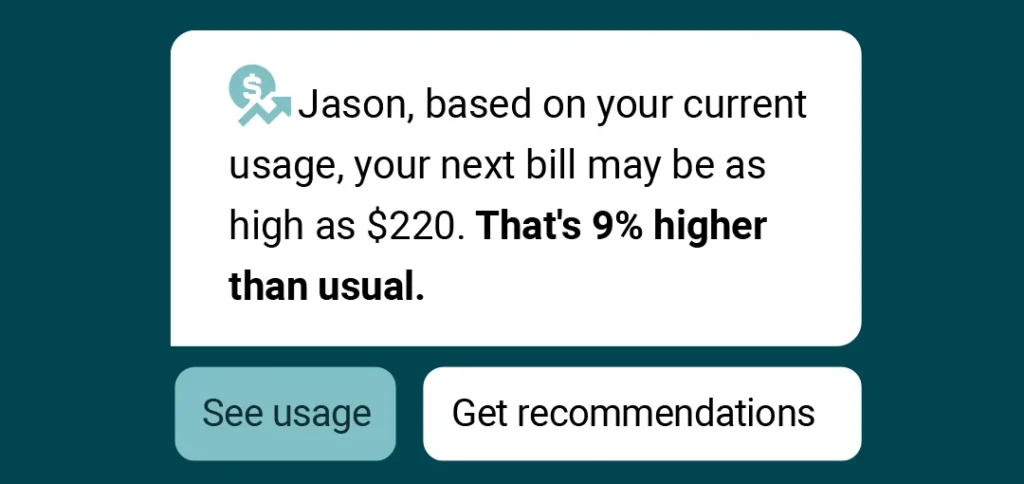
Consider a household whose energy consumption begins trending above normal halfway through the billing cycle. A timely high usage alert can flag the change before it becomes a costly surprise. If the utility can also estimate the likely financial impact, the customer can better understand the consequences of that usage and decide whether to take action.

A RCS message example with the text: Jason, based on your current usage, your next bill may be as high as $220. That's higher than usual.
See usage
Get recommendations

The most useful communications connect three things:

  • What is changing: Usage is higher than expected, a bill is projected to exceed its usual amount, or a rate change will affect upcoming charges.
  • Why it matters: The customer receives a plain-language explanation of the likely cause and, where possible, an estimate of the financial impact.
  • What the customer can do: The communication offers relevant next steps, such as reviewing energy-saving guidance, checking for unusual consumption, exploring budget billing, or finding payment assistance.

This approach helps utilities move beyond notifying customers about a problem toward helping them understand and respond to it.

Timing matters just as much when the increase is not avoidable. If a rate change or other known factor is expected to affect upcoming bills, communicating that impact in advance gives customers an opportunity to plan. They may not be able to change the underlying cost, but they should not have to discover the change without warning.

Better bill explanations go beyond kilowatt-hours

Energy usage data is valuable, but most customers do not think about their household budgets in kilowatt-hours. They think in dollars, monthly expenses, and trade-offs.

That distinction should shape how utilities communicate.

A useful bill explanation translates technical information into financial context. Rather than simply showing that consumption increased, it helps customers understand how that increase affects their expected charges. Rather than listing a rate adjustment, it explains how the change may affect the amount they pay.

Depending on the information available, a clear explanation may address:

  • Weather and seasonal usage: How heating or cooling demands may have contributed to a higher bill.
  • Changes in consumption: Whether the household used more energy than in previous billing periods and what patterns may explain the difference.
  • Rate changes: How new rates or pricing structures may affect the cost of electricity, including the potential impact on the customer’s bill.
  • Billing period differences: Whether the current statement covers more days than the previous one, which can affect the total amount due.
  • Practical ways to manage costs: What adjustments, efficiency resources, or available programs may help reduce future expenses.

Personalization makes these explanations more relevant. A household whose bill increased because of extreme temperatures needs different guidance from one whose costs rose after a rate change. A customer approaching a high bill may need an estimate and energy-saving recommendations, while someone who has already received an unexpectedly large statement may need payment options or assistance resources.

The important distinction is between providing information and making that information useful. Customers should not have to interpret complicated usage charts or piece together multiple bill components to understand what happened.

Clear explanations also need to be honest about what customers can control. Energy-saving recommendations may help reduce consumption, but they cannot offset every rate increase or eliminate the energy required to heat and cool a home safely. When higher costs stem from factors outside a household’s control, utilities should explain those factors and focus on the planning tools and support that are available.

Trust is built before the bill arrives

When affordability becomes a public policy issue, utilities may find themselves under greater scrutiny regardless of which candidates win office or which policy proposals advance. Customers will continue to evaluate their own experiences, particularly whether they understand the charges they receive and feel informed about changes that affect their household budgets.

That makes proactive communication an important part of customer trust.

Trust does not depend on every bill being lower than the last. Utilities operate within complex systems and costs can rise for reasons that cannot be resolved through customer communication alone. But customers can reasonably expect timely information, straightforward explanations, and access to resources that help them navigate those changes.

Communication is particularly important when utilities know that customers are likely to face higher costs. Advance notice about rate changes, projected bills, or unusual usage can help reduce uncertainty. Follow-up messages can connect customers with relevant assistance programs, budget billing options, or payment arrangements when appropriate.

This is also where communication needs to extend beyond a single bill notification. A useful customer experience connects information across the billing cycle: an early usage alert, an explanation of the likely cost impact, an update as the projection changes, and a clear path to additional support if needed.

For utilities, this approach can support both customer outcomes and operational priorities. Customers who understand their bills may have fewer reasons to contact the call center simply to ask what changed. Customer service representatives can spend less time reconstructing billing explanations and more time addressing complex questions and individual needs.

In other words, proactive communication can help utilities serve customers more effectively while managing the operational demands that come with rising billing concerns.

DTE Energy demonstrates the value of billing clarity

DTE Energy offers a practical example of how better billing communication can benefit both customers and utility operations.

Serving 2.3 million electric customers across Michigan, DTE faced growing confusion around increasingly complex and unpredictable energy bills. Higher costs were driving more billing-related calls, putting pressure on customer service operations while creating frustration for customers seeking answers.

DTE partnered with Convey to give customers and customer service representatives better access to personalized billing insights, projected bill information, and explanations of the factors contributing to higher charges.

Through BillWise AI, customers can gain clearer visibility into their energy usage and bill drivers, while proactive high bill alerts help identify potential surprises before they arrive. Customer service representatives can also access relevant information to explain billing changes and guide customers toward appropriate next steps.

The results demonstrate the potential impact of this approach. DTE reported a 96% deflection rate on high-bill calls, alongside a year-over-year reduction in total calls during peak seasons, lower average handle times, and improved customer sentiment.

These outcomes matter for more than call center efficiency. They show how providing customers with better information can address a source of frustration before it becomes a more involved service interaction.

DTE’s experience also illustrates an important principle for utilities navigating affordability concerns: improving the customer experience does not always require changing the underlying cost of service. Sometimes, a meaningful improvement starts with helping customers understand the costs they face and what options are available to them.

Making affordability communication part of the customer experience

Utilities do not need to wait for a regulatory inquiry or a surge in high-bill calls to improve how they communicate about costs. A more proactive approach can begin with a few practical questions.

Are customers notified when costs are likely to rise? If the utility can identify unusual usage or project a higher bill, customers should have an opportunity to receive that information before the statement arrives.

Do explanations connect usage to dollars? Technical details are important, but customers also need understandable estimates of financial impact and an explanation of what is driving the change.

Are recommendations relevant to the customer’s situation? Generic energy-saving tips have limited value if they do not address the likely cause of a higher bill. Guidance should reflect the information available and distinguish between factors customers can influence and those they cannot.

Can customers find help when they need it? Bill explanations should connect naturally to energy efficiency resources, assistance programs, budget billing, payment arrangements, or other available support.

Are communications consistent across channels? Customers should receive clear, coordinated information whether they engage through text messages, email, a digital account, or a customer service representative.

These questions can help utilities assess where their existing communications fall short and identify opportunities to give customers more useful information at the right time.

Technology can help make this approach scalable. With the right billing data, usage insights, and communication workflows, utilities can identify relevant events, deliver personalized explanations, and connect customers with next steps without relying on manual outreach for every account.

Convey’s BillWise AI is designed to support this kind of experience through proactive high bill alerts, clear explanations of bill changes, and actionable recommendations tailored to customer usage and cost drivers.

The broader principle, however, extends beyond any one solution. Utilities can make progress by treating billing communication as an ongoing service rather than a message delivered only when payment is due.

Affordability is a long-term trust issue

The political attention surrounding energy affordability this November reflects a concern that will continue long after Election Day. Customers will still need to understand their bills, manage household expenses, and make decisions about energy use. Utilities will still need to communicate changes clearly while balancing operational requirements, infrastructure investments, and customer needs.

Proactive communication cannot solve every affordability challenge. But it can help prevent avoidable surprises, give customers more time to prepare, and make available support easier to understand and access.

Most importantly, it changes the nature of the relationship. Instead of leaving customers to interpret a higher bill on their own, utilities can provide the context and guidance needed to make informed decisions.

As scrutiny of energy costs grows, the question for utilities is not simply whether their bills are accurate. It is whether customers understand them, have enough time to respond to changes, and know where to turn for help.

The utilities that make those answers clear will be better positioned to build trust through a period of continued affordability pressure.

Interested in how your utility can provide billing clarity to your customers?

Frequently asked questions about utility affordability and customer communication

Why is energy affordability becoming a bigger concern for utilities?

Rising household energy costs are putting pressure on customers and drawing greater attention from regulators, policymakers, and elected officials. As customers face higher bills, they increasingly need clear explanations of what is driving those costs and what options are available to manage them. Utilities must address both the cost challenges customers face and the uncertainty that comes with bills they do not understand.

How can utilities help customers manage rising energy bills?

Utilities can help by providing advance notice of expected bill increases, explaining changes in plain language, and connecting customers with practical next steps. Proactive high usage alerts, projected bill information, energy efficiency recommendations, budget billing options, and payment assistance resources can help customers make informed decisions before a higher bill becomes an unexpected financial burden.

Why are proactive utility bill alerts important?

Traditional billing statements often explain charges after the billing period has ended. Proactive alerts give customers earlier visibility into unusual energy consumption or projected bill increases, allowing them to adjust their usage when possible, plan for upcoming expenses, or explore available assistance. Earlier communication can reduce surprises and help customers feel more informed about their energy costs.

What should a utility bill explanation include?

A useful bill explanation should identify what changed, explain the likely reasons, and describe the potential financial impact in straightforward terms. Where the data allows, utilities should translate changes in energy consumption or rates into estimated dollar amounts. Relevant recommendations and links to assistance resources can then help customers understand what they can do next.

How can utilities build customer trust during periods of rising energy costs?

Trust grows when utilities communicate consistently, explain costs transparently, and give customers timely access to useful information. While utilities cannot prevent every rate increase or control every factor affecting a household’s bill, they can reduce uncertainty by providing advance notice, personalized explanations, and clear guidance on available options.

How can AI help utilities improve billing communication?

AI can help utilities analyze billing and usage patterns, identify potential high-bill situations, and deliver more relevant explanations and recommendations. Solutions such as BillWise AI can help utilities provide proactive alerts and personalized bill insights, giving customers a clearer understanding of what is driving their costs while helping customer service teams manage billing inquiries more efficiently.

References

  1. PowerLines. (2026, October 20). Utility bills are on the ballot.