

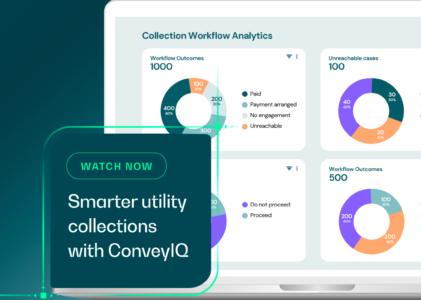
From delinquent to recovered: Smarter utility collections with ConveyIQ
Utility collections have entered a new era. Rising energy costs, expiring assistance programs, and expanding regulatory oversight have fundamentally changed…
Discover how Convey solves problems and fulfills needs.

Message Broadcast rebrands as Convey, marking a
Read More
Message Broadcast rebrands as Convey, marking a
Read More

Public power utilities are under growing pressure to do more with less.
With fewer staff, tighter budgets, rising customer expectations, and regulatory scrutiny, utilities are also expected to address increasing concerns around customer affordability. Yet many regional and community-based utilities are still relying on reactive, one-way communication strategies that drive call center volume, frustrate customers, and make it difficult to demonstrate service improvements to regulators and governing boards.
In our recent webinar, From reactive to resilient: Modern customer communications for public power utilities, Susan DeClerck and Paul Watkins from Convey, alongside Ben Murdock from Chartwell, Inc., explored how public power utilities are modernizing customer communications by shifting to proactive, repeatable, and compliant messaging across digital channels, helping customers better understand outages, bills, and usage at a time when affordability and trust matter more than ever.
Historically, many utilities have relied on one-way or reactive communication strategies. Customers call when they have questions about a bill, an outage, or unexpected energy usage, and customer service teams respond.
But this model creates several challenges:
When customers don’t have the information they need, they pick up the phone.
Modern customer communication strategies focus on reaching customers before confusion or frustration occurs.
In the webinar, experts from Convey and Chartwell, Inc. discuss how utilities are using proactive messaging across digital channels to keep customers informed and engaged. This includes automated outreach around outages, billing, and energy usage delivered through the channels customers already use.
When done well, proactive communication can:
Just as important, these strategies can be implemented without adding operational complexity.
During the session, Chartwell, Inc. Senior Analyst Ben Murdock shares insights from utility benchmarking and residential consumer research.
These findings highlight several key trends:
The research also explores how communication influences customers’ perception of affordability and the value their utility provides.
For public power utilities, customer communications are no longer just about convenience, they’re also about accountability.
Utilities must be able to demonstrate how they are improving service, supporting affordability, and responding to customer needs. In the webinar, the speakers share real-world examples of how community-owned utilities are using scalable communication platforms to create repeatable messaging strategies that support regulatory conversations and rate case narratives.
Tools like reference-based messaging, TCPA controls, and automated customer outreach help utilities maintain compliance while delivering consistent, transparent communication at scale.
Public power utilities don’t have the luxury of adding large teams or unlimited resources. But they can modernize how they communicate.
If you’re exploring ways to reduce call volume, improve customer satisfaction, and build a more resilient communication strategy, this session offers practical insights and real-world examples you can apply.
Who should watch this webinar?
This session is designed for leaders at public power utilities responsible for customer engagement and operational performance, including customer service leaders, communications teams, operations managers, and IT professionals.
What will I learn from the webinar?
The webinar covers how public power utilities are using proactive messaging strategies to reduce inbound calls, improve customer satisfaction, and deliver clearer communication around outages, billing, and energy usage. It also shares benchmarking insights into customer expectations and satisfaction trends.
How can proactive messaging reduce call center volume?
When customers receive timely updates about outages, bills, or usage changes, they are less likely to contact the utility for information. Automated alerts and notifications provide answers before customers feel the need to call, helping utilities manage demand on their contact centers.
What role does customer research play in communication strategies?
Customer research helps utilities understand what information customers want, when they want it, and which communication channels they prefer. Benchmarking insights can guide messaging strategies and help utilities measure improvements in satisfaction and engagement.
Can smaller utilities implement these types of communication strategies?
Yes. Many public power utilities with smaller teams are adopting scalable communication platforms that automate messaging across channels. These tools allow utilities to deliver proactive outreach without significantly increasing operational workload.
Read other insights and news from the Convey team.
Utility collections have entered a new era. Rising energy costs, expiring assistance programs, and expanding regulatory oversight have fundamentally changed…
In late January, Storm Fern swept across multiple regions, leaving millions of residents without power and disrupting communities in profound…
The challenge that DTE faced DTE Energy serves 2.3 million electric customers across Michigan, many of whom were increasingly impacted…
Loading...