

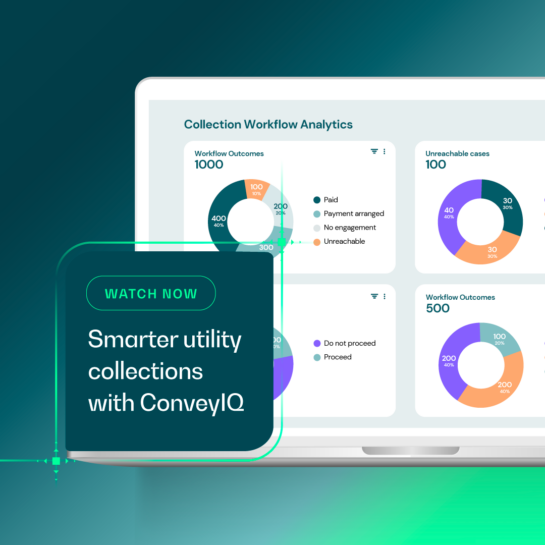
From delinquent to recovered: Smarter utility collections with ConveyIQ

By Convey News
February 25, 2026 3 min read
Share this post
news icon
From delinquent to recovered: Smarter utility collections with ConveyIQ

Utility collections have entered a new era.

Rising energy costs, expiring assistance programs, and expanding regulatory oversight have fundamentally changed the arrears landscape. What once worked—a linear sequence of letter → reminder → final notice → shutoff—was built for stable conditions. Today’s environment is anything but stable.

In our recent webinar, From Delinquent to Recovered: Smarter Utility Collections with ConveyIQ, Susan DeClerck and Raed Adhami explored why traditional collections models are breaking down and what utilities can do instead.

The problem: Linear collections in a nonlinear world

Utilities are now managing:

  • Higher average overdue balances
  • Increased commission scrutiny
  • Channel-specific consent requirements
  • Weather moratoriums and affordability mandates

At the same time, many organizations are still operating with disconnected systems and undifferentiated messaging. A first-time delinquent with 18 months of on-time payments often receives the same notice sequence as a chronic non-payer.

That approach creates operational inefficiency, regulatory risk, and customer frustration.

The shift: Orchestrated, compliant engagement

Convey built ConveyIQ to move utilities from message sending to decision orchestration.

Instead of asking, “What should we send?” ConveyIQ asks:

Given everything we know about this customer right now, what is the right next action and are we permitted to take it?

Every action is evaluated through four layers:

  1. Customer context (balance, history, vulnerability indicators)
  2. Compliance rules (consent, moratoriums, contact cadence)
  3. Journey state (what’s already been sent, how they responded)
  4. Next best action (channel, timing, message)

Compliance is enforced before a message is sent, not after.

Why this matters

Utilities implementing coordinated, segmented journeys have seen:

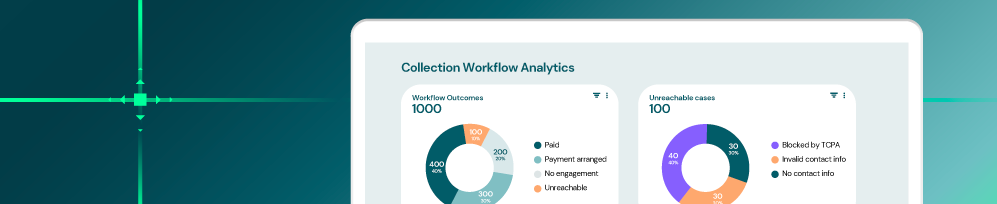
  • Up to 30% increases in debt recovery
  • 79% reductions in accounts sent to external agencies
  • Six-figure annual savings in communication costs

But just as important, they’re reducing duplicate notices, lowering contact center strain, and protecting trust in the communities they serve.

Collections is no longer a back-office process. It’s a regulated, visible, customer-facing experience.

The utilities that treat it that way will be better positioned—not just to recover revenue, but to strengthen long-term relationships.

Frequently Asked Questions

Does ConveyIQ require replacing our CIS or billing system?
No. ConveyIQ sits above existing systems and integrates at the data and event layer.

How does consent management work?
Consent is treated as a dynamic, account-level state. Opt-outs are enforced instantly, and every action or suppression is logged.

Can we start small?
Yes. Many utilities begin with a single use case, such as first-time delinquent early intervention, and expand over time.

How do Convey’s solutions respond to regulatory audit requests?
Every action, compliance check, and suppression is automatically logged, creating a defensible audit trail by default.

Is this collections solution only for large utilities?
No. The orchestration model applies to any utility managing arrears, regulatory complexity, and multi-channel engagement.