


Improving residential electric utility satisfaction in 2026

By Convey News
February 5, 2026 12 min read
Share this post
news icon
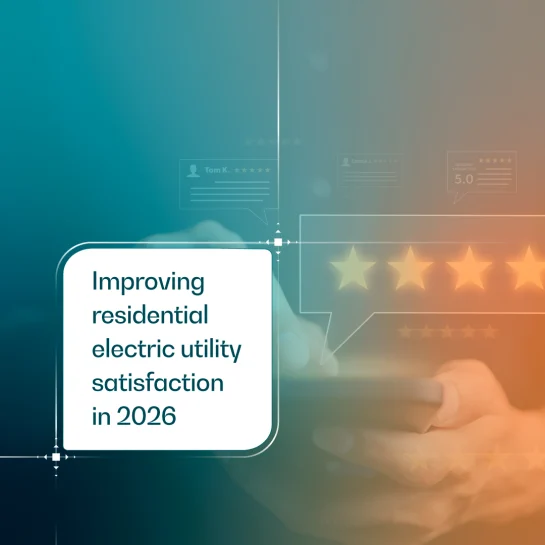
Improving residential electric utility satisfaction in 2026

Residential electric utilities are entering 2026 facing a hard truth: customer satisfaction is eroding at the same time affordability concerns are intensifying. While utilities may not control market forces or energy prices, they do control how clearly, consistently, and empathetically they communicate with customers. And that difference matters more than ever. 

Residential electric utility customer satisfaction is at an all-time low 

Residential electric utility customer satisfaction has reached its lowest recorded point. According to the 2025 JD Power U.S. Electric Utility Residential Customer Satisfaction Study,1 overall satisfaction dropped to 499 out of 1,000, the lowest score ever measured across the study’s history. At the same time, customers are paying more than they ever have before. 

Average monthly residential electric utility costs have surged 34% since 2020, reaching $189 for 2025, with Q4 bills climbing even higher to $206. For many households, electricity has shifted from a manageable expense to a meaningful strain on monthly budgets. 

Across the U.S., customers are growing increasingly frustrated with their utility experience. Bills rise month after month, yet customers often lack clear explanations for why. What once felt predictable now feels volatile, and that uncertainty fuels dissatisfaction. 

Affordability is top of mind for many Americans right now. As essential service providers, utilities are expected to be transparent, fair, and clear about charges. When customers don’t understand what they’re paying for, frustration quickly turns into distrust. 

In fact, a portion of utility customers believe their bills are intentionally confusing2. Many feel that line items, rate changes, and usage explanations are designed in ways that make true understanding difficult. Whether or not that perception is accurate, the impact is real: lost trust, increased call volume, and declining satisfaction. 

How utilities can improve CSAT scores and other satisfaction measures 

Utilities cannot always control rising costs, but they can control clarity. Improving customer satisfaction does not require overhauling infrastructure or lowering rates overnight. It requires meeting customers where they are with better context, better explanations, and better tools. 

Customer satisfaction improves when customers: 

  • Understand what changed on their bill and why 
  • Feel informed before they feel surprised 
  • Trust that their utility is being transparent and proactive 

For utilities, this means shifting from reactive explanations to proactive insights. Instead of forcing customers to hunt for answers, utilities can deliver them upfront in ways that are timely, personalized, and easy to understand. 

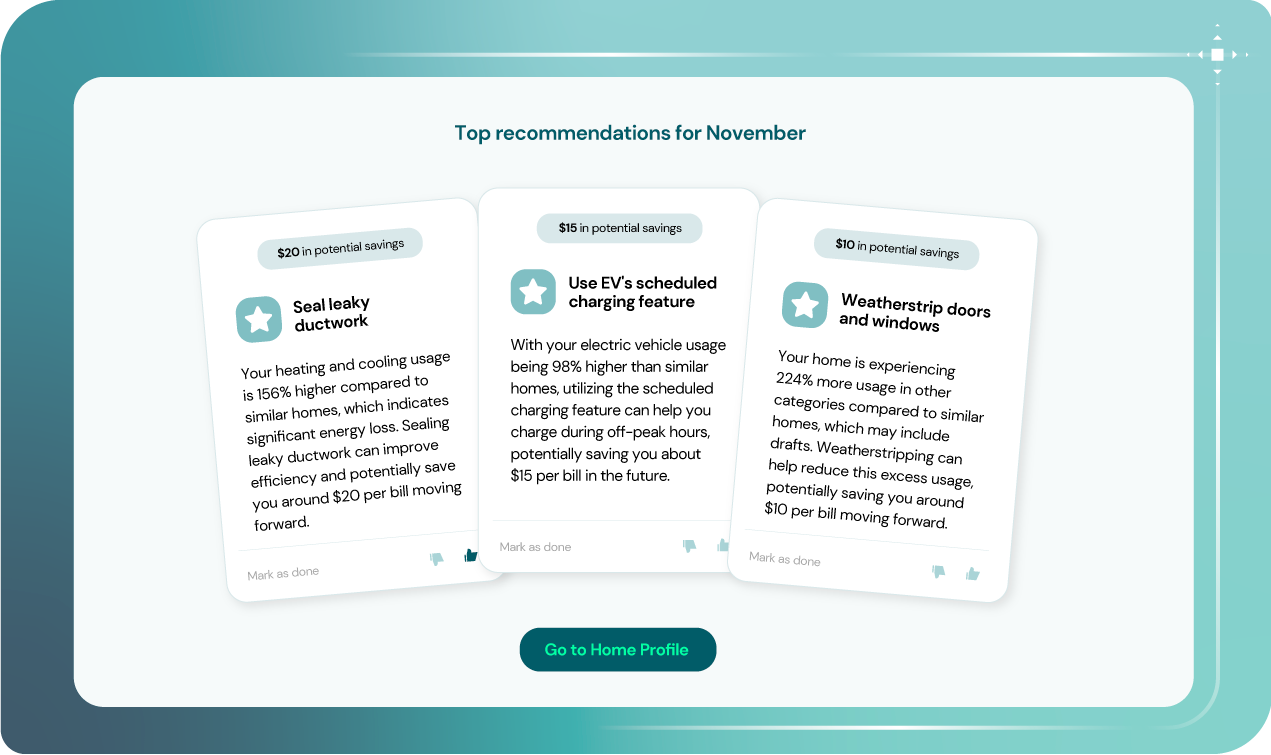
Convey offers Utilities the ability to improve customer trust with personalized billing insights for actionable outcomes. These intelligent recommendations show possible savings each month, giving customers proactive steps they can take to lower their utility bills.  

Improving customer satisfaction with simplified billing insights 

Customers don’t want to comb through their utility bills each month trying to decode changes. They want quick, relevant answers to simple questions: Why is my bill higher? Is this normal? What can I do about it? 

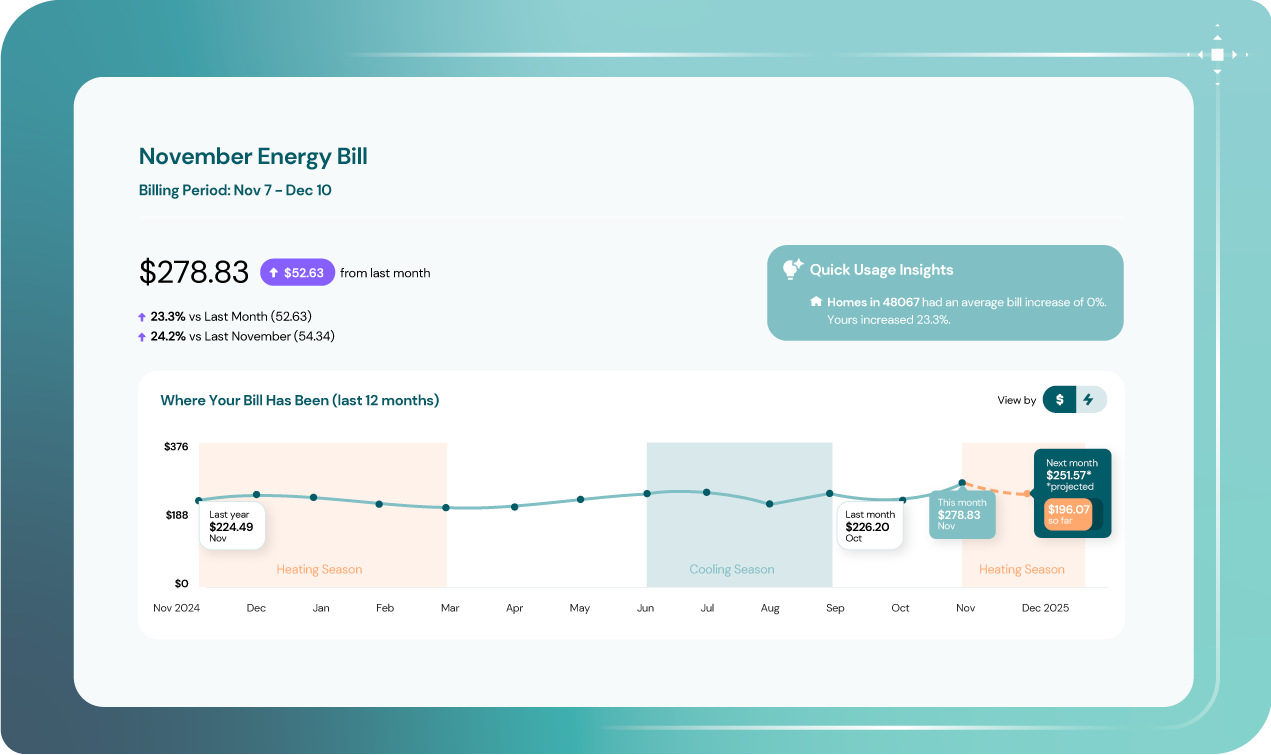
Simplifying the billing journey starts with presenting information in a way that makes sense to the customer. A personalized dashboard with intelligent billing insights can highlight: 

  • What changed compared to last month 
  • Whether usage, rates, or seasonal factors drove the increase 
  • How current usage compares to similar households or past behavior 

When customers receive context alongside their bill, confusion decreases and confidence increases. Instead of assuming the worst, customers feel informed and respected. 

This kind of proactive clarity doesn’t just reduce frustration. It builds trust, reduces inbound calls, and empowers customers to make informed decisions about their energy use. 

Customers can see the changes in their billing over months and years. This increases customer trust in utilities while giving customers the power for self-service, decreasing inbound calls and their cost. 

When utility customers contact the call center for billing questions 

What CSRs face when utility customers contact the call center for billing questions 

Even with better self-service tools, some customers will always prefer to call. Billing questions are emotional by nature, especially when affordability is already a concern. When customers reach out, they expect fast, clear answers. 

For many utilities today, customer service representatives face an uphill battle. To explain a billing change, utilities have reported that CSRs may need to navigate 15 to 20 different screens and systems just to piece together the full story. As a result, the average handle time for a billing-related call increases, often with frustrated customers on the line. 

This complexity hurts everyone: 

  • Customers wait longer for answers 
  • CSRs feel overwhelmed and underprepared 
  • Utilities absorb higher operational costs 
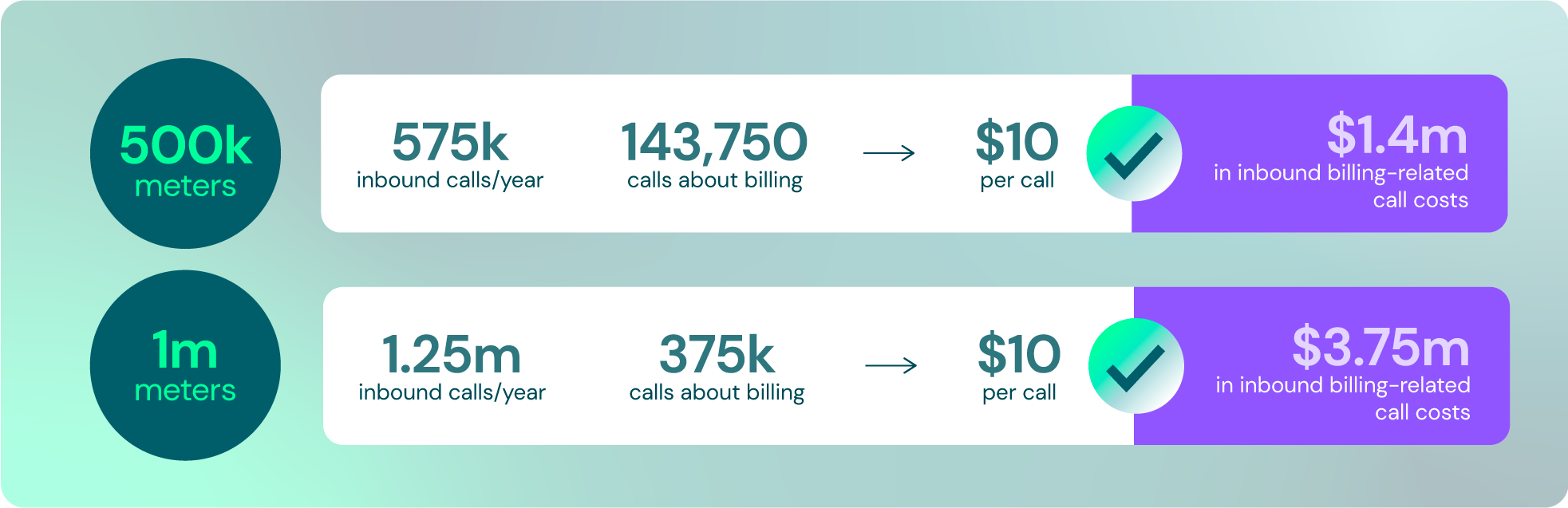
Inbound billing-related call costs at $10 per call. Utilities with 500k meters, can pay upwards of $1.4 million dollars a year while utilities with 1 million meters can pay close to $4 million a year.3
Inbound billing-related call costs at $10 per call. Utilities with 500k meters, can pay upwards of $1.4 million dollars a year while utilities with 1 million meters can pay close to $4 million a year.3

Equipping CSRs with unified, intelligent billing insights allows them to immediately see what changed and why. When representatives can confidently explain charges without system-hopping, calls become calmer, shorter, and more productive. 

How Convey’s personalized intelligent energy usage and analytics billing solution changes everything for CSRs 

With BillWise AI, the CSR’s experience changes entirely. Customer service representatives can see a customer’s full billing breakdown in one unified view, including what changed, why it changed, and how current charges compare to previous bills. Instead of searching for answers, CSRs can focus on the conversation in front of them. 

This clarity speeds up calls and lowers average handle time, but the impact goes beyond efficiency. When CSRs can confidently explain billing changes, customers feel heard and informed. Trust is built in real time, even during difficult conversations. 

For CSRs, having the right information at the right moment reduces stress and burnout. Calls feel more productive, fewer escalations are required, and representatives leave interactions knowing they helped resolve a real problem. Over time, that confidence translates into higher job satisfaction, better morale, and a more resilient customer service team. 

By simplifying billing intelligence for the people who need it most, BillWise AI improves the experience on both sides of the conversation, creating better outcomes for customers, CSRs, and the utility as a whole. 

Improving satisfaction delivers measurable operational benefits 

Investing in customer satisfaction isn’t just good practice, it pays dividends operationally. When utilities clarify bills, deliver proactive insights, and enable self-service digital channels, they often see reductions in call volume, shorter average handle times, and fewer repeat contacts. 

Research in the broader utilities customer experience space shows that customers who receive proactive communication score significantly higher in satisfaction than those who don’t, a lift that often corresponds with fewer inbound support requests and less strain on call centers.  

Beyond call volumes, proactive communication and clarity in billing drive improved perceptions of fairness and trust. Today’s utility customers increasingly equate transparency with value and satisfaction with providers that behave transparently. In many segments, utilities that have improved communication and digital interaction strategies have seen noticeable gains in overall satisfaction scores, even where rates remain high.  

Operational benefits cascade beyond customer interactions: 

  • Customer service teams spend less time piecing together answers and more time resolving complex issues. 
  • Analytics teams gain better feedback loops to improve products and programs. 
  • Reduced churn and higher loyalty translate into more predictable demand planning. 

Simply put, every dollar invested in clarity and proactive outreach can reduce operational inefficiencies downstream. 

Looking ahead: What utility customer satisfaction will require in 2026 

As residential electric utility satisfaction levels hit historic lows, with overall satisfaction at 499 on a 1,000-point scale1, expectations are clear: customers want clarity, control, and context.  

Looking ahead to 2026, utilities that thrive will focus on three priorities: 

  1. Transparency as a foundation for trust. With rising costs continuing to pressure household budgets, customers will increasingly reward utilities that explain why bills change and how different factors affect their usage and charges. 
  1. Omnichannel, customer-centric communication. Utility interactions will need to feel seamless across digital and human touchpoints. Customers don’t differentiate channels, they just want consistent, clear answers wherever they engage. Digital experiences such as mobile apps, dashboards, and portals that anticipate questions will drive satisfaction.  
  1. Predictive and personalized insights. Utility satisfaction will no longer hinge solely on reactive service but on predictive understanding, giving customers foresight into usage trends, seasonal costs, and personalized ways to manage bills. This guides utility customers with knowledge of usage for the ability to consider adjustments for greater control of their bills and rate plans. 

Utilities that invest in proactive communications, integrated digital experiences, and clear billing narratives are not just checking a box, they are responding to a fundamental shift in what customers expect from essential services. In an age where trust is increasingly fragile, proactive clarity is emerging as the most important competitive advantage. 

How Convey can increase your customer satisfaction scores in 2026 

As residential electric utility satisfaction continues to decline, clarity and proactive communication are no longer optional. Customers don’t expect lower bills overnight, but they do expect transparency, context, and answers they can understand. BillWise AI helps utilities meet that expectation by turning complex billing data into clear, actionable insights for both customers and customer service teams. By simplifying explanations, reducing avoidable calls, and restoring trust at the point where frustration often starts, utilities can improve satisfaction without adding operational strain. 

Experience the impact of BillWise AI to see how intelligent billing insights can transform your customer experience in 2026 and beyond. 

References 

  1. J.D. Power. (2025, December 17). 2025 U.S. Electric Utility Residential Customer Satisfaction Study. 
  2. WOKV. (2025, February 13). Power bill sticker shock? 22% of Americans say they don’t even know what they’re paying for. 
  3. McKinsey & Company. (2021, October 4). Transforming customer experience in utilities. 

Frequently Asked Questions about improving residential electric utility satisfaction

Why is residential electric utility customer satisfaction so low right now?

Residential electric utility satisfaction is at a historic low due to a combination of rising costs and limited bill clarity. Customers are paying more for electricity while struggling to understand why their bills change from month to month. When price increases are not paired with clear explanations, frustration and distrust grow quickly.

What do customers find most confusing about their electric bills?

Customers most often struggle to understand what changed on their bill and why. Common points of confusion include usage fluctuations, rate adjustments, seasonal impacts, and line items that lack plain-language explanations. Without context, customers are left to assume the worst, which drives dissatisfaction and inbound calls.

Can utilities improve customer satisfaction without lowering rates?

Yes. While utilities may not control energy prices, they can control how clearly and proactively they communicate. Providing personalized billing insights, advance notifications, and easy-to-understand explanations has a measurable impact on trust, satisfaction, and call volume, even when rates remain high.

How does bill clarity affect customer trust?

Bill clarity is directly tied to trust. When customers understand what they are paying for and feel informed rather than surprised, they are more likely to view their utility as transparent and fair. Clear communication reduces the perception that bills are intentionally confusing and helps preserve long-term customer relationships.

How do simplified billing insights reduce call center volume?

When customers receive answers before they need to ask, fewer billing questions turn into phone calls. Proactive insights that explain changes, compare usage, and offer next steps enable self-service and reduce repeat contacts. This lowers inbound call volume and shortens average handle times for the calls that do occur.

Why are billing calls so challenging for customer service representatives?

Billing calls often require CSRs to navigate multiple systems to piece together usage, rate, and billing data. This increases handle time, raises stress levels, and makes it harder to deliver confident explanations. Without unified billing insights, even experienced representatives struggle to provide fast, clear answers.

How does better billing intelligence improve CSR performance and morale?

Unified, intelligent billing insights allow CSRs to see what changed, why it changed, and how it compares to prior bills in a single view. This reduces system-hopping, shortens calls, and makes conversations more productive. Over time, this clarity reduces burnout, lowers escalations, and improves job satisfaction.

What operational benefits come from improving customer satisfaction?

Utilities that invest in proactive communication and billing clarity often see measurable operational gains, including reduced call volume, lower call costs, shorter handle times, and fewer repeat contacts. These improvements create efficiency across customer service, analytics, and planning teams while improving the overall customer experience.

What will utility customers expect in 2026?

In 2026, customers will expect transparency, personalization, and consistency across every interaction. They want to understand future costs, see how their usage compares over time, and receive insights that help them take control of their bills. Satisfaction will increasingly depend on proactive guidance rather than reactive support.

How can Convey help utilities improve customer satisfaction?

Convey helps utilities improve satisfaction by turning complex billing and usage data into clear, actionable insights for customers and CSRs. With BillWise AI, utilities can reduce confusion, lower avoidable calls, and restore trust at critical moments in the customer journey, without adding operational complexity.