



RCS for businesses is raising the standard for trusted customer communication and fraud prevention

By Convey News
May 20, 2026 6 min read
Share this post
news icon
RCS is raising the standard for trusted customer communication and fraud prevention

Consumers are more connected than ever, but they are also more cautious. Between phishing attempts, spoofed phone numbers, and fraudulent text messages, trust in digital communication has eroded. Organizations across industries are facing the same challenge: how do you reach customers quickly and effectively while proving the message is legitimate? 

This is where Rich Communication Services (RCS) for businesses is changing the conversation. 

RCS transforms traditional business messaging into a branded, verified, and interactive experience that helps organizations build trust, improve engagement, and protect communities from fraud. 

Why trust matters more than ever 

SMS has long been a reliable communication channel because of its immediacy and reach. But bad actors have learned to exploit its limitations. Generic sender IDs, lack of branding, and limited authentication make it easier for fraudulent messages to appear legitimate. 

Customers today are looking for reassurance before they engage with a message. They want to know: 

  • Who sent it  
  • Whether it is legitimate  
  • If it is safe to click  

RCS addresses these concerns directly by introducing features designed around trust, transparency, and engagement. 

How RCS helps prevent fraud 

Verified sender identity 

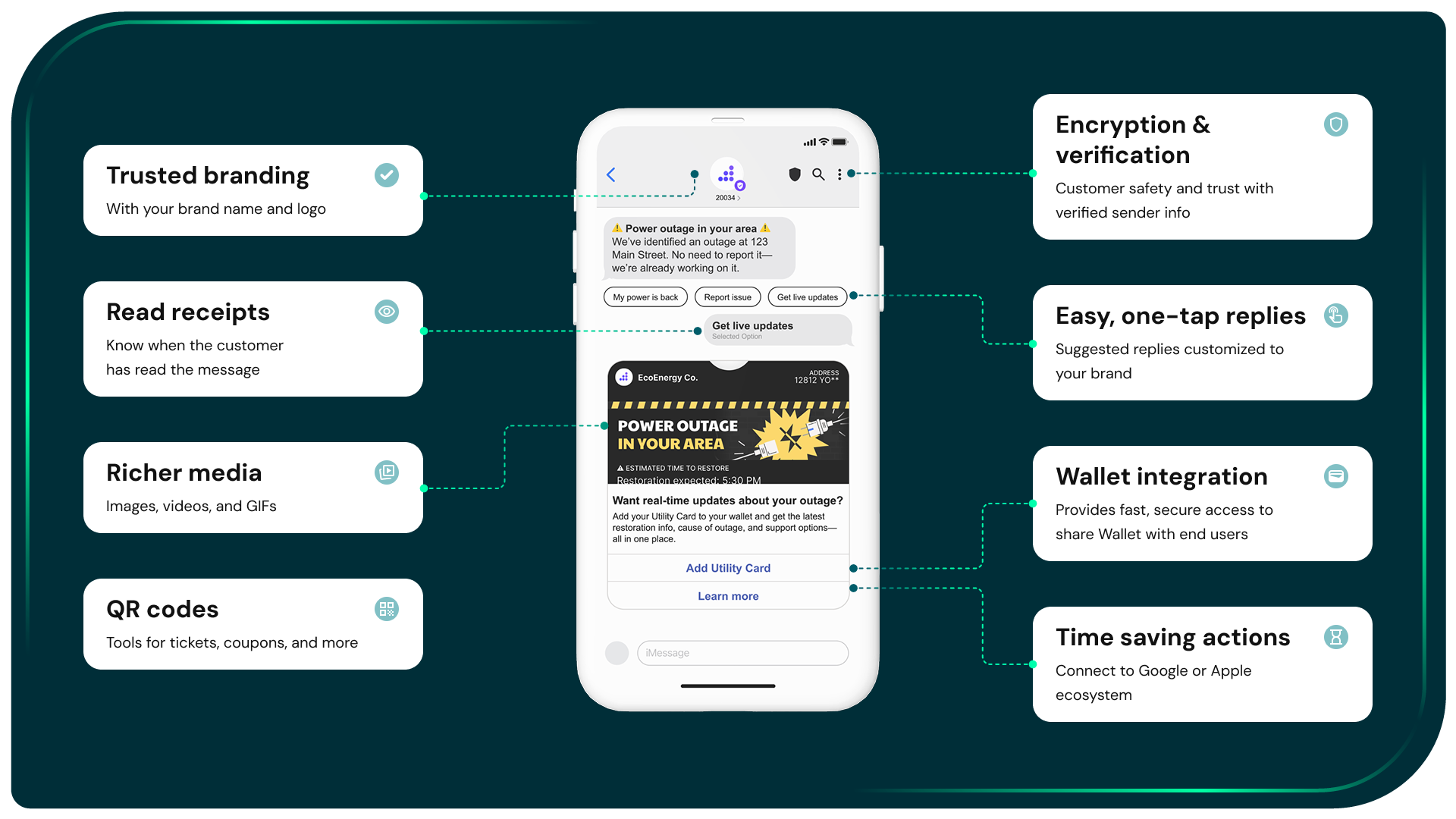
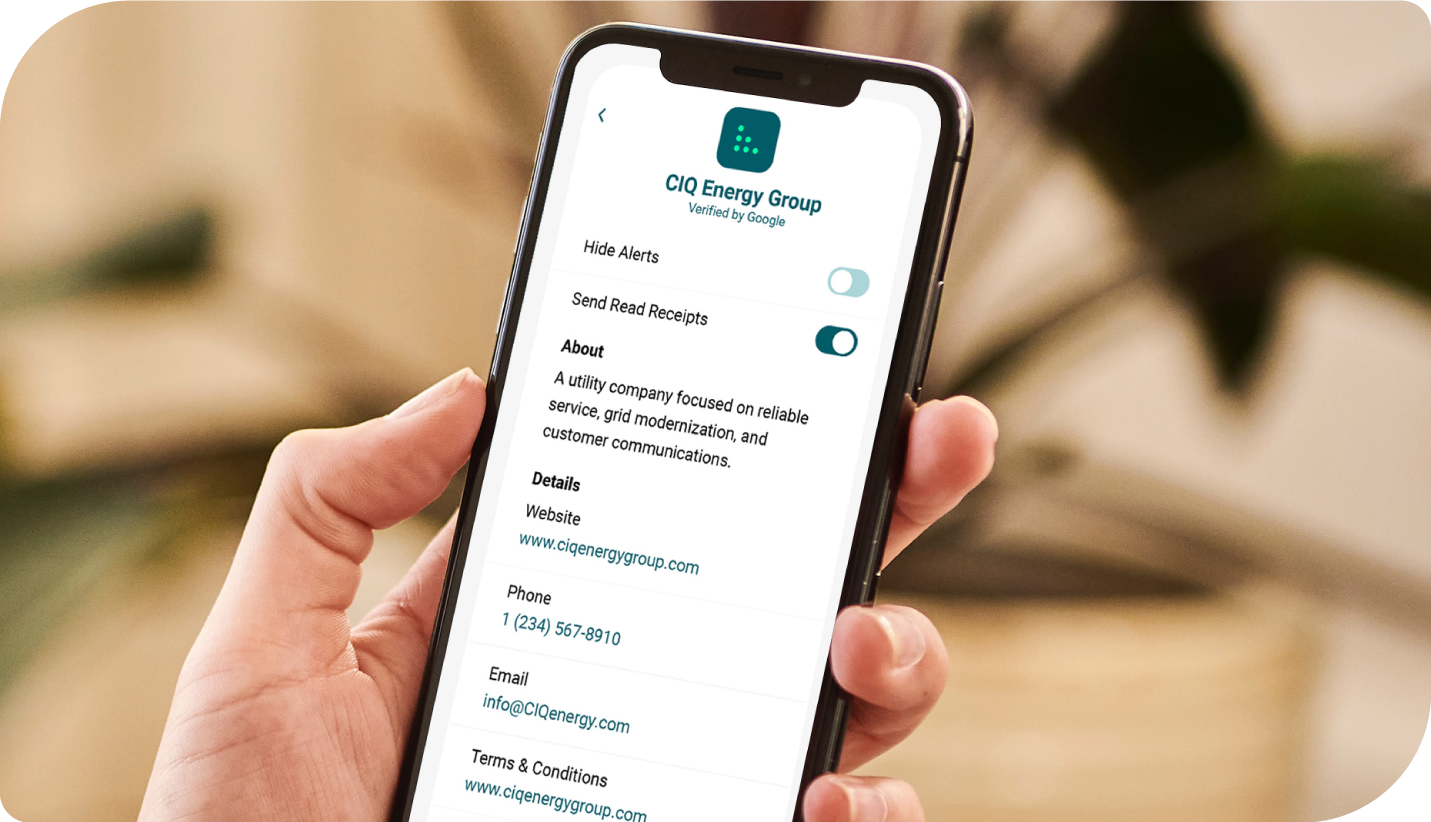
One of the most powerful features of RCS is verified sender authentication. Businesses can display their official name, logo, and brand colors directly within the message experience. 

This creates an immediate visual cue that the message is authentic, helping customers distinguish legitimate communications from scams or spoofed texts. 

Instead of receiving a message from an unknown number, customers see a recognizable, verified brand they trust. 

Branded messaging builds confidence 

RCS messaging feels more like a secure app experience than a traditional text message. Organizations can create consistent, branded interactions that reinforce legitimacy and professionalism. 

Branded messaging helps: 

  • Reduce customer skepticism  
  • Increase confidence in links and calls-to-action  
  • Strengthen brand trust over time  
  • Create a more secure communication environment  

When customers know exactly who is contacting them, they are more likely to engage safely. 

Read receipts create accountability 

RCS for businesses also introduces read receipts and delivery confirmations, giving organizations greater visibility into message performance and customer engagement. 

This helps organizations: 

  • Confirm critical messages were received  
  • Identify communication gaps quickly  
  • Improve response timing during urgent situations  
  • Create more reliable customer interactions  

For time-sensitive communications, this added transparency can make a meaningful difference. 

Customers engage more with RCS 

The trust and interactivity of RCS are driving significantly higher engagement compared to traditional SMS. 

Industry data shows: 

  • RCS clickthrough rates average 22.5%, compared to 5.5% for SMS  
  • RCS conversion rates average 30%, compared to 4% for SMS1 
RCS vs SMS performance comparison graph

These numbers reflect more than just improved marketing performance. They demonstrate that customers are more willing to engage with messages they perceive as secure, verified, and trustworthy. 

When consumers feel confident in the legitimacy of a message, they are far more likely to take action. 

What organizations can do with RCS 

RCS is not limited to promotional messaging. It supports a wide range of secure, customer-focused communication use cases across industries. 

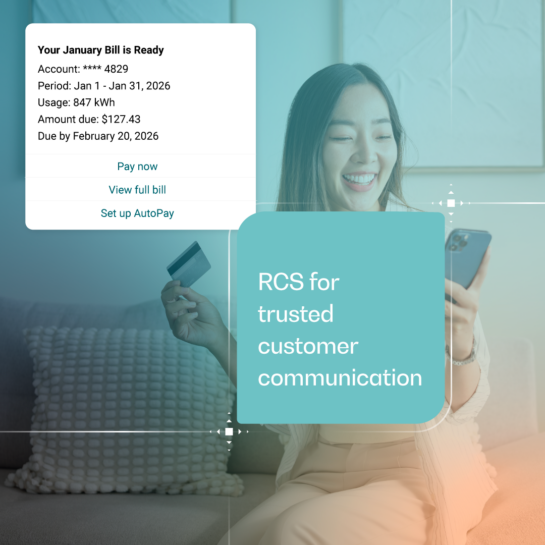
Billing and payment reminders 

Organizations can send branded billing notifications, payment reminders, and account updates that help customers confidently interact with important financial communications. 

Verified messaging reduces uncertainty and helps prevent fraudulent payment scams. 

Appointment management 

RCS makes scheduling and appointment management more seamless with interactive confirmations, reminders, and rescheduling options directly within the messaging experience. 

Customers can take action quickly without needing to navigate away from the conversation. 

Surveys and feedback collection 

Interactive buttons and rich media make surveys easier to complete and more engaging for customers, resulting in higher participation rates and more valuable feedback. 

Emergency notifications 

In critical moments, trust and speed matter. RCS enables organizations to deliver verified emergency alerts with branded messaging that helps communities quickly identify legitimate communications during high-stress situations. 

This can help reduce confusion and misinformation when accurate information matters most. 

Customer support 

RCS creates more conversational support experiences with rich messaging, suggested replies, and interactive capabilities that improve issue resolution and customer satisfaction. 

Customers can engage with confidence knowing they are communicating with an authenticated organization. 

The future of trusted messaging with RCS for businesses

As digital fraud continues to evolve, organizations need communication channels that prioritize both engagement and security. 

RCS represents the next evolution of business messaging by combining: 

  • Verified identities  
  • Trusted branded experiences  
  • Rich interactivity  
  • Real-time engagement insights  

For organizations looking to strengthen customer trust, improve engagement, and help protect communities from fraudulent communications, RCS offers a more secure and modern path forward. 

The future of messaging is not just richer. It’s more trusted. 

Frequently Asked Questions (FAQs) on RCS for businesses

What is RCS?

Rich Communication Services (RCS) is the next generation of business messaging for mobile devices. It enhances traditional text messaging by enabling branded, interactive, and media-rich conversations directly within a customer’s native messaging app. With RCS, businesses can send verified messages that include images, videos, carousels, buttons, maps, and real-time updates, creating a more engaging and trusted customer experience than standard SMS.

What is the difference between RCS and SMS?

SMS is a basic text-only messaging format with limited functionality and character counts. RCS builds on SMS by delivering a modern messaging experience that supports rich media, branded sender profiles, read receipts, typing indicators, suggested replies, and interactive engagement options. While SMS is designed for simple communication, RCS enables businesses to create conversational, app-like experiences directly within messaging channels customers already use every day.

How is RCS more secure than other messaging channels?

RCS helps improve trust and security by allowing businesses to verify their brand identity before sending messages. Verified sender information, including official business names, logos, and branding, helps customers confidently recognize legitimate communications and reduces the risk of spoofing and phishing attempts. RCS also supports encrypted transmission in certain messaging environments, adding an additional layer of protection for customer interactions.

What secure features does RCS have for businesses?

RCS offers several built-in security and trust features designed for enterprise communication, including:

  • Verified business messaging that confirms sender authenticity
  • Branded sender profiles with logos, colors, and company information
  • End-to-end encryption support in compatible environments
  • Secure rich media delivery for images, videos, and interactive content
  • Read receipts and delivery confirmations for greater message visibility
  • Spam protection and sender vetting to help prevent fraudulent messaging
  • Trusted customer interactions through native mobile messaging experiences

These capabilities help businesses deliver more secure, transparent, and engaging communications while improving customer confidence and response rates.