

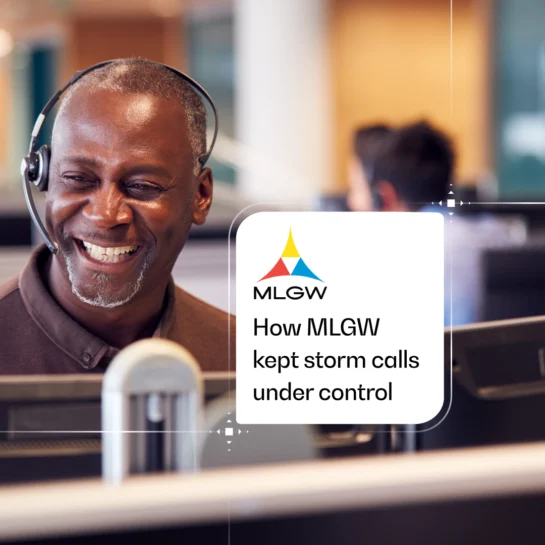

How MLGW reduced storm-related call volume with proactive outage communications

By Paul Watkins
November 25, 2026 8 min read
Share this post
How MLGW reduced storm-related call volume with proactive outage communications
case study icon
How MLGW reduced storm-related call volume with proactive outage communications

When severe weather disrupts electric service, customer calls can quickly overwhelm utility call centers. Customers want to know whether their power is out, when service might be restored, and where they can find reliable updates. Without direct communication, the call center often becomes the primary place customers turn for answers.

For utilities, this creates a difficult situation. Teams must manage the operational demands of a major outage while responding to a sudden increase in customer inquiries. Even routine questions can take valuable time away from customers who need direct assistance.

Proactive outage communications offer a different approach. Rather than waiting for customers to call, utilities can deliver timely information directly to affected customers through the channels they already use. This helps address common questions earlier, reduce avoidable calls, and give call center teams more capacity to focus on customers who need additional support.

Memphis Light, Gas and Water Division (MLGW) put this approach into practice during a major January storm, demonstrating just how much a proactive communication strategy can change the customer experience and the demands placed on a call center.

Why storm-related calls overwhelm utility call centers

Major storms can create an immediate surge in customer service demand. When thousands of customers lose power, many naturally turn to their utility for information.

Some of the most common questions include:

  • Is my outage known to the utility?
  • What caused the interruption?
  • When can I expect power to be restored?
  • Where can I get updates about my service?

When customers cannot easily find answers, they often pick up the phone. Even when a utility has information available through its website, social media, or local news coverage, customers may not know where to look or may prefer to receive updates directly.

This puts additional pressure on call center employees at the exact moment when operational demands are already high.

Traditional approaches that rely heavily on customers finding information themselves can leave utilities reacting to inquiries instead of getting ahead of them. A more effective outage communication strategy puts information in front of customers before they feel the need to call.

How proactive outage communications help reduce call volume

Proactive outage communications shift the focus from responding to customer questions to anticipating them.

By sending outage information directly to affected customers, utilities can provide timely updates without requiring customers to search for information or contact customer service.

An effective strategy can help utilities:

Reach affected customers directly

Instead of relying exclusively on social media, news coverage, or website updates, utilities can communicate directly with customers impacted by an outage.

Using channels such as SMS, email, and voice, utilities can deliver relevant information where customers are most likely to see it.

Reduce avoidable customer service calls

Many storm-related calls are driven by customers looking for basic information about their outage. When customers receive updates proactively, some of those questions can be answered before they reach the call center.

This helps reduce routine inquiries and gives customer service representatives more time to assist customers with complex issues.

Manage major outages with existing resources

A major storm does not necessarily have to mean additional staffing, emergency call center activation, or overnight overtime.

With the right communication strategy, utilities can manage customer expectations and provide information at scale while making better use of their existing resources.

Deliver information through preferred communication channels

Customers have different communication preferences. A multichannel approach gives utilities more opportunities to reach affected customers through the methods they already use.

The result is a more direct and accessible customer experience during an otherwise stressful situation.

MLGW reduced storm-related call volume by more than 90% with Convey

A major January storm put MLGW’s outage communication strategy to the test.

The storm left nearly 10,000 meters without power, creating the potential for a significant increase in customer calls. Before partnering with Convey, MLGW primarily relied on social media and news coverage to communicate service disruptions. While these channels provided updates, they did not consistently reach customers directly.

With Convey, MLGW shifted to proactively contacting customers affected by the storm. Customers received timely outage information through their preferred communication channels, helping answer questions before they reached the call center.

The results were significant:

  • 90%+ fewer calls compared with comparable storms.
  • Approximately 20 calls waiting in the queue, compared with an expected 200–300.
  • Six employees supporting customers during the storm.
  • No need to activate an emergency call center response or bring in overnight overtime staffing.

For MLGW, the difference was especially meaningful for its customer care team.

“Prior to Convey, my team was overwhelmed with calls. After the partnership, we didn’t see the queue go over 20 calls waiting during the storm. I’ve worked in the call center for 25 years and I’ve never seen that happen before.”

Kenneth Culp, Director of Customer Care, MLGW

The experience demonstrates how proactive outage communications can help utilities manage customer expectations, reduce unnecessary call volume, and maintain service levels during major events.

Building a more effective utility storm communication strategy

Preparing for severe weather requires more than having a plan to restore service. Utilities also need a plan for communicating with customers throughout the event.

A strong storm communication strategy should account for several important considerations:

1. Identify affected customers.
Utilities need a way to reach the customers impacted by an outage with information relevant to their service location.

2. Communicate proactively.
Do not wait for customers to contact the call center. Share relevant information as soon as it becomes available and continue communicating as the situation develops.

3. Use multiple communication channels.
SMS, email, and voice provide different ways to reach customers. Giving customers access to information through familiar channels can improve the likelihood that they receive and engage with updates.

4. Prioritize the customer experience.
Customers want clear, timely, and relevant information during an outage. Communications should help them understand what is happening and where to turn for additional assistance.

5. Evaluate performance after major events.
Review call volume, customer engagement, communication reach, and staffing demands to understand what worked and where improvements can be made before the next storm.

When these elements work together, utilities can move beyond reactive customer service and build a more resilient approach to outage communications.

Better storm communications start before the next outage

Severe weather is difficult to predict, but the customer communication challenges that come with it do not have to catch utilities off guard.

As MLGW demonstrated, reaching customers directly with timely information can make a meaningful difference in call center demand. With the right approach, utilities can help customers stay informed while giving their teams more capacity to manage the situations that require direct support.

Convey helps utilities transform outage information into proactive customer engagement, connecting with affected customers through timely, targeted communications when it matters most.

See how Convey can help your utility prepare for the next major outage.

download

Download the case study

Open a shareable PDF version of the case study, ready to download and circulate across your teams.

Frequently asked questions about storm communication and Convey

How can utilities reduce call volume during major storms?

Utilities can reduce storm-related call volume by proactively sending outage information and updates directly to affected customers. Using SMS, email, and voice communications helps answer common questions before customers need to contact the call center.

What is proactive outage communication?

Proactive outage communication is the practice of sending customers relevant information about service disruptions without waiting for them to request it. This can include outage notifications, service updates, and restoration information delivered through channels such as text messages, email, and automated voice calls.

Why are storm communications important for utility call centers?

During major weather events, call centers often experience a significant increase in inquiries from customers seeking outage information. Proactive communications help reduce routine questions, allowing customer service representatives to focus on customers who need additional assistance.

What communication channels should utilities use during outages?

Utilities can use SMS, email, and automated voice communications to reach customers during service disruptions. A multichannel strategy helps accommodate different customer preferences and provides more opportunities to deliver important outage information.

How did MLGW reduce calls during a major storm?

During a January storm that left nearly 10,000 meters without power, MLGW used Convey to proactively communicate outage information to affected customers. The utility experienced more than 90% fewer calls than during comparable storms, with approximately 20 calls waiting in the queue compared with an expected 200–300. Six employees supported customers without the need for an emergency call center response or overnight overtime staffing.

How can utilities prepare their customer communications for severe weather?

Utilities should develop a communication strategy that identifies affected customers, supports proactive notifications, uses multiple communication channels, and provides timely updates throughout an outage. Reviewing performance after major weather events can also help identify opportunities to improve future response efforts.