

A simpler path to secure, PCI-compliant utility payments
Paying an energy bill is one of the most common interactions customers have with their utility. Whether a customer is…

Siloed systems and disconnected customer communications make it harder for utilities to deliver timely, personalized service. A modern communication intelligence layer can help utilities strengthen customer trust, reduce avoidable costs, and respond to changing customer needs.
Utility customer communication has become more complex, but many utilities still rely on systems designed to handle individual tasks. Billing systems send payment reminders, outage management systems distribute restoration updates, and customer service teams manage their own outreach. Each system may serve its intended purpose, but without coordination, the overall customer experience can become fragmented.
For mid-size utilities and investor-owned utilities (IOUs), this creates a growing challenge. Customers need clear, timely information about bills, usage, payment options, outages, and service changes. At the same time, utilities face rising affordability pressures, evolving regulatory expectations, and increasing demands on customer service teams.
Sending more messages is not necessarily the answer. Utilities need a better way to understand what is happening across the customer journey and determine which communication will be most useful at any given moment. A modern communication intelligence layer can help bridge that gap by connecting existing systems, bringing customer context into communication workflows, and enabling more coordinated, personalized engagement.
Utility communications often span multiple departments, platforms, and workflows. Billing, customer service, and operations may each communicate with the same customer without visibility into what other teams have sent or how the customer responded.
This fragmentation can create unnecessary work for utility teams. Coordinating outreach may require manual data pulls, reconciliation, and information sharing between systems. These processes take time and can introduce errors or rely on outdated information. The result is a disconnected approach to customer engagement. A utility may successfully send an individual billing reminder or outage alert while missing the broader context needed to coordinate its communications.
Connecting these systems through a shared communication intelligence layer gives utilities a more unified view of customer interactions without requiring every existing system to perform every communication function.
A single communication rarely tells the whole story. A customer who receives a payment reminder may also have contacted customer service, requested a due-date extension, or experienced a recent service disruption.
When utility teams cannot see these interactions together, they may struggle to understand what the customer needs next. Communications that make sense in isolation can become confusing or poorly timed when viewed in the context of the customer’s broader experience. This is particularly important when circumstances change quickly. A customer receiving a disconnection notice shortly before a widespread outage, for example, may need clarification about whether they still need to take action.
A communication strategy that accounts for the customer’s current situation can help utilities coordinate messages, pause or suppress communications when appropriate, and provide more relevant guidance.
Without real-time customer context, utilities often default to broad, one-size-fits-most communications. These messages may provide useful information, but they cannot always account for differences in customer needs, account status, eligibility, or previous interactions.
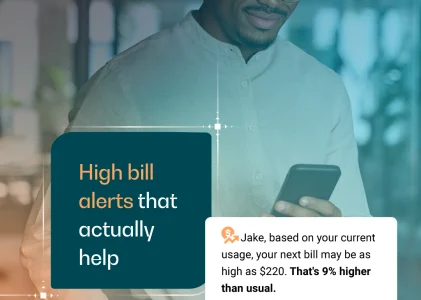
A more intelligent approach uses available customer, account, and event data to determine what to communicate, who should receive it, when it should be sent, and which channel is most appropriate. For example, a customer who is approaching delinquency may benefit from information about payment options or assistance programs before the situation escalates. A customer experiencing an unexpected increase in energy usage may benefit from an early alert that helps explain the change.
These interactions can also provide opportunities to learn more about customer needs and improve subsequent communications.
A modern communication intelligence layer connects information across systems and uses that context to coordinate customer engagement over time. Rather than treating every message as an isolated event, utilities can manage communications as part of an ongoing customer journey.
This approach supports live journeys that respond to changes in customer status, account information, and operational events.
Consider a customer who is three days late on a bill and has requested short due-date extensions several times over the past year. A basic billing workflow might send another standard payment reminder. A journey informed by the customer’s history could instead identify an opportunity to offer a payment extension or direct the customer to an appropriate assistance resource.
The same principle applies during outages, rate changes, and other high-impact events. By accounting for real-time circumstances, utilities can coordinate communications around changing priorities rather than allowing separate systems to continue sending messages without context.
A communication intelligence layer can help utilities:
The goal is not simply to automate more messages. It is to make each interaction more relevant, timely, and useful.
Utility bills, rate structures, and energy usage can be difficult for customers to understand. When customers cannot explain why their bills have changed or what an account update means, uncertainty can lead to frustration and additional calls to customer service.
Research cited in the playbook highlights the scale of this challenge. According to EY, 56% of customers wish their electric bills were easier to understand, while 59% agree that parts of their bills seem like another language.
Utilities can use proactive, contextual communication to help address this confusion before it escalates.
For example, a utility could notify customers about an upcoming rate-plan change and provide resources explaining its potential impact. It could alert a customer when current usage is trending higher than the previous month or remind customers on time-of-use plans when electricity costs are highest.
These communications give customers information they can use to better understand their accounts and make informed decisions. They also help utilities build trust by providing clear explanations instead of waiting for customers to seek answers.
That trust becomes especially important when utilities communicate high-stakes information, including rate increases, load-shed events, and other service changes.
Customer service call centers are an important part of utility operations, but inbound calls can be expensive and time-consuming. Many calls stem from questions that could potentially be addressed through timely information, clearer explanations, or more accessible self-service options.
The playbook cites McKinsey estimates that utilities with two million customers receive two to three million calls annually, at a cost of $20 million to $40 million.
Two common sources of call volume are customers surprised by changes to their bills and frequent callers whose needs have not been fully resolved. A communication intelligence layer can help utilities identify opportunities to address these situations earlier.
For example, utilities can use proactive communications to:
When customers receive useful information at the right time, they may be able to resolve questions without contacting customer service. This can reduce avoidable inbound calls while allowing representatives to focus on more complex customer needs.
The value extends beyond call deflection. Coordinated workflows can also reduce manual work associated with reconciling customer data, managing separate communication systems, and coordinating outreach across departments.
Utilities are navigating affordability challenges and changing regulatory expectations at the same time. These pressures make it increasingly important to communicate clearly, respond promptly, and help customers understand their options.
According to J.D. Power data cited in the playbook, average monthly residential electric utility costs increased 34% between 2020 and 2025, reaching a record high.
As more customers face difficult payment decisions, utilities need effective ways to communicate available assistance programs, payment options, and information that helps customers better understand their usage.
Reaching customers early can help them explore available resources before an account issue becomes more difficult to resolve. Personalized communication can also make it easier to connect customers with information relevant to their circumstances.
Regulatory requirements related to customer satisfaction, responsiveness, communication timing, and rate structures continue to create new considerations for utility teams.
The playbook highlights time-of-use rate transitions as one example. When customers move to a different rate structure, they may need additional information to understand how their usage and bills could be affected. Without clear communication, confusion can contribute to more customer service inquiries and dissatisfaction.
A coordinated communication strategy helps utilities provide timely explanations and resources as requirements and customer circumstances change. It also gives teams a more consistent way to manage outreach across workflows.
For utilities operating with limited resources, modernizing communication is not simply a technology initiative. It is an opportunity to improve customer experiences while addressing operational demands and evolving expectations.
Utilities do not need to replace every existing system to improve customer communication. They need a way to connect those systems, understand customer interactions in context, and coordinate what happens next.
A modern communication intelligence layer makes this possible by bringing real-time information into live customer journeys. Instead of relying on disconnected, reactive workflows, utilities can provide more personalized guidance, reduce unnecessary confusion, and help customers navigate important account and service events.
For mid-size utilities and IOUs, this approach offers a path toward stronger customer relationships and more efficient operations while building on existing technology investments.
download
Download the playbook, Why Utilities Need a Modern Communication Intelligence layer, to explore the challenges, opportunities, and practical considerations for modernizing utility communication.
A communication intelligence layer connects information across utility systems and uses customer, account, and event context to coordinate communications. It helps utilities determine what information to send, which customers need it, when to send it, and which channel to use.
Many utilities rely on separate systems for billing, outage notifications, customer service, and other workflows. Without coordination, these systems can create fragmented communications, limited visibility into customer interactions, and missed opportunities to provide timely, relevant guidance. A modern strategy helps bring these interactions together.
Proactive communication can address common customer questions before they lead to inbound calls. Examples include explaining bill changes, alerting customers to unusual usage, sharing payment options, and directing customers to relevant self-service resources. These interactions can help reduce avoidable calls and give representatives more time to handle complex issues.
Personalized communication provides information that is relevant to a customer’s circumstances. By explaining account changes, offering appropriate resources, and delivering updates at the right time, utilities can reduce confusion and help customers better understand their bills, usage, and service.
A communication intelligence layer can connect information and workflows across existing systems, providing a more coordinated view of customer engagement. This allows utilities to build on their current technology investments while improving how communications are planned, delivered, and adjusted over time.
Rising energy costs, affordability concerns, changing rate structures, and evolving regulatory expectations are increasing the need for clear and timely customer communication. Utilities need effective ways to help customers understand their options, respond to changing circumstances, and navigate important service and account events.