


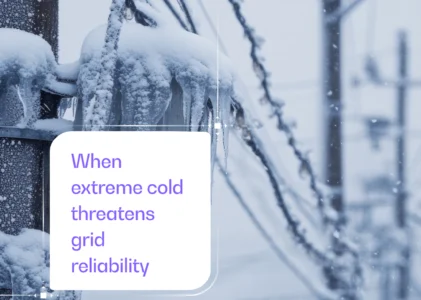
Keeping customers informed when extreme cold threatens grid reliability
Extreme cold puts additional pressure on electric grids. As temperatures drop, heating demand increases, equipment faces more challenging operating conditions,…

Artificial intelligence is quickly becoming part of how utilities operate. From forecasting electricity demand and identifying equipment issues to supporting customer service teams, AI is creating new opportunities to improve efficiency, manage growing workloads, and deliver better experiences. But as adoption accelerates, so does an important question: how well do utilities understand, document, and govern the technology they are putting to work?
That question is beginning to move from internal conversations to regulatory agendas.
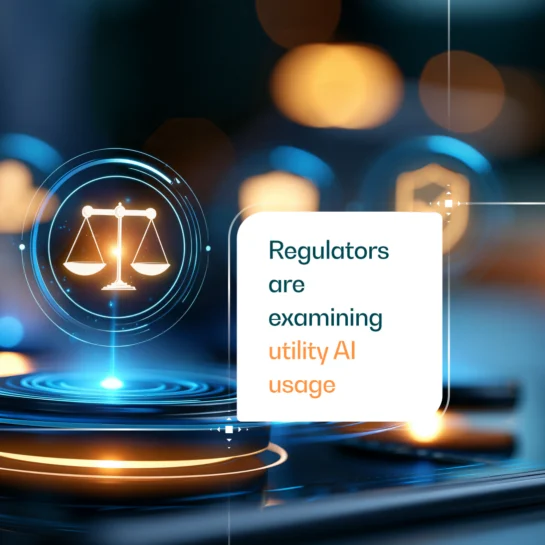
In September 2026, the New York Public Service Commission launched an inquiry into how electric, gas, and water utilities use artificial intelligence.1 The commission directed utilities to submit written inventories of their AI use cases, along with information about the policies, procedures, and protocols governing those systems.
The conversation expanded in October when Connecticut Attorney General William Tong and Consumer Counsel Claire Coleman petitioned the state’s Public Utilities Regulatory Authority to conduct a similar review.2 Their request specifically called for information about the objectives of AI systems, the level of human oversight involved and the safeguards utilities have in place.
These developments signal a shift in how AI adoption may be evaluated across the utility industry. It is no longer enough to demonstrate what AI can do. Utilities increasingly need to demonstrate how it works, what information it uses and what protections are in place when something goes wrong.
And that scrutiny should extend beyond the grid.
Much of the discussion surrounding AI in utilities naturally centers on critical infrastructure. AI-assisted forecasting, predictive maintenance, asset management and grid optimization can all influence the safety and reliability of essential services. When these systems produce inaccurate or inconsistent outputs, the consequences can extend well beyond an individual workflow.
However, AI is also finding its way into another important part of utility operations: customer engagement.
Customer-facing applications, including virtual assistants, automated phone systems, chatbots and agent-assist tools, are increasingly capable of interpreting questions, retrieving information and generating responses. These tools may help customers understand their bills, navigate payment options, report service issues or get information during an outage.
While these applications may not directly control physical infrastructure, they still influence how customers interact with essential services. An inaccurate explanation of a bill, incorrect payment guidance or misleading information about an outage can create confusion, erode trust and lead to additional work for customer service teams.
The risks are different, but the underlying governance questions are similar.
These are not just technology questions. They are questions about customer protection, accountability and the responsibility utilities have to the communities they serve.
As regulators take a closer look at AI across utility operations, customer-facing applications should be part of the conversation.
The pace of AI adoption makes governance especially important. Utilities are under pressure to modernize operations, manage rising demand, address workforce constraints and meet increasingly complex customer expectations. AI can help address some of these challenges, but implementing the technology without a clear understanding of its risks can create new vulnerabilities.
A recent review of regulatory filings highlighted a notable gap. According to research cited by Utility Dive in October 2026, approximately 70% of energy and utility companies identified AI as a cybersecurity risk.3 Yet only 23% of utilities documented a process for managing that risk. The review also found that just 9% of energy companies had documented processes.
The findings point to a disconnect between recognizing AI-related risks and having formal processes to manage them.
For utilities, that distinction matters. A general AI policy may establish expectations, but effective governance requires more than a statement of intent. Organizations need practical ways to understand where AI is being used, monitor its behavior and demonstrate that appropriate controls are operating.
This becomes particularly important as utilities introduce AI into customer interactions. Without visibility into what a system accessed, generated or communicated, it can be difficult to investigate an inaccurate response, identify the source of an error or demonstrate that the appropriate safeguards were followed.
If a customer disputes information provided by an AI assistant, the utility should not have to rely on assumptions about what happened. It should have a way to reconstruct the interaction and understand how the system arrived at its response.
Accountability requires a record.
As AI becomes more integrated into utility operations, organizations should begin thinking about governance before expanding deployment. That means considering not only what an AI application is designed to accomplish, but also how it will be monitored, documented and managed throughout its lifecycle.
Several capabilities are especially important for customer-facing AI.
Visibility into AI interactions
Utilities should have access to meaningful records of AI-driven interactions. This includes the customer’s request, the information used to generate a response, the output delivered and the outcome of the interaction. These records can help teams investigate issues, identify patterns and demonstrate how AI is being used.
Data privacy and security protections
Customer-facing AI may interact with sensitive information, including account details, payment information, service addresses and personal preferences. Utilities need to understand where that information goes, how it is processed, who can access it and whether it is used to train or improve external models. Data protection should be considered from the beginning, not added as an afterthought.
Clear boundaries and human oversight
AI should operate within defined responsibilities. Not every customer question or situation is appropriate for automated handling. Systems should recognize when a request falls outside their capabilities, when information is uncertain or when a customer needs additional assistance. Human escalation should be a deliberate part of the workflow, not an exception that is difficult to access.
Consistent testing and monitoring
AI systems can produce different outputs as models, data sources and configurations change. Utilities need ongoing ways to evaluate accuracy, identify problematic responses and monitor performance. A system that performs well during an initial pilot may behave differently as usage expands or customer needs change.
Documented governance and accountability
Utilities should be able to identify who is responsible for each AI application, what its intended use is, which data sources it can access and what procedures apply when something goes wrong. Third-party AI tools and vendors should also be included in that oversight.
Together, these practices help move AI from an experimental capability to a more accountable part of utility operations.
One of the most important considerations in responsible AI adoption is the environment in which the technology operates.
As discussed in our recent article on private AI, regulated industries cannot approach AI adoption the same way every other organization might. Utilities manage sensitive customer information and operate within environments where privacy, security and trust are fundamental responsibilities.
Public AI tools can introduce questions about how information is stored, processed, shared and potentially used to improve models. For utilities, those questions deserve careful consideration before employees or customer-facing applications begin interacting with sensitive organizational or customer data.
Private AI offers a more controlled approach. By operating within defined security and data-access boundaries, private AI environments can give organizations greater control over the information their AI systems can access and how that information is handled.
But privacy is only one part of responsible AI.
A secure environment does not automatically make an AI system accurate, unbiased, or accountable. Utilities still need documented processes, appropriate access controls, testing, monitoring, and human oversight. They also need the ability to understand and retrieve the records behind AI-driven decisions and customer interactions.
In other words, private AI provides an important foundation for protecting information. Governance provides the structure for using that information responsibly.
Both will become increasingly important as utilities move toward more sophisticated AI applications.
Read more about why private AI matters.
The recent actions in New York and Connecticut may be early indicators of where utility AI oversight is headed. While the specific requirements and approaches will vary by jurisdiction, the direction of the conversation is becoming clearer: regulators want to understand how utilities are using AI, what risks it introduces and what safeguards are in place.
Utilities do not need to wait for additional regulatory requirements to begin preparing.
Now is the time to take inventory of existing AI applications, establish clear ownership, evaluate third-party tools and identify gaps in documentation and oversight. That inventory should include customer service and engagement applications, not just systems connected to grid operations.
As AI becomes a more prominent part of how utilities serve customers, the ability to demonstrate responsible use will be just as important as the technology itself.
The question is no longer simply whether AI can help a utility work more efficiently. It is whether the utility can explain, document and stand behind the work AI performs on its behalf.
When a regulator asks what your AI told a customer, will you have the records to show them?
As utilities adopt AI across grid operations, customer service and internal workflows, regulators want greater visibility into how these systems operate and what risks they introduce. Recent actions in states like New York and Connecticut reflect growing interest in AI transparency, data protection, human oversight, and accountability.
AI-powered chatbots, virtual assistants, automated phone systems, and agent-assist tools can influence how customers receive information and make decisions. Utilities should be able to document these interactions, understand how responses are generated, and demonstrate that appropriate safeguards are in place.
AI governance refers to the policies, procedures, and controls organizations use to manage AI systems responsibly. For utilities, this includes defining acceptable uses, protecting sensitive information, monitoring accuracy, documenting AI activity, and establishing human oversight.
Utilities should consider maintaining records of AI applications, their intended purposes, authorized data sources, system outputs, customer interactions, access permissions, testing results, and human escalations. These records can help organizations investigate issues and demonstrate responsible AI practices.
Public AI tools may introduce risks related to sensitive data exposure, data retention, unauthorized access, and how submitted information may be used. Utilities should understand how each tool handles information before using it for customer or operational data.
Private AI provides a more controlled environment for processing organizational information. It can give utilities greater control over data access, privacy, security, and how information is handled. However, private AI should be paired with governance policies, monitoring, and documentation to support responsible use.
No. Private AI can help address important data privacy and security concerns, but it does not automatically satisfy regulatory requirements. Organizations still need appropriate security controls, documented policies, testing, monitoring, and human oversight.
Utilities can begin by creating an inventory of AI applications, identifying the data each system accesses, reviewing vendor security practices, documenting governance policies, and establishing processes for monitoring and auditing AI activity. Customer-facing AI applications should be included in these efforts.
As AI becomes more deeply integrated into utility operations and customer engagement, transparency and accountability will become increasingly important. Utilities that establish clear governance practices early will be better positioned to manage emerging risks and adapt to evolving regulatory expectations.
1. Walton, R. (2026, September 24). New York audits utility AI use, cites risk in ‘growing dependency’. Utility Dive
2. Connecticut Office of the Attorney General. (2026, October 13). Attorney General Tong, Consumer Counsel Coleman petition PURA for probe of artificial intelligence use by public utilities. Connecticut Attorney General
3. Wilden, M. (2026, October 22). Utilities turn to AI to manage rising power demand — from AI. Utility Dive