
How Tacoma made self-service tax payments accessible in five languages with Convey
Self-service only works when customers can use it. For residents who don’t speak English as a first language, an English-only…
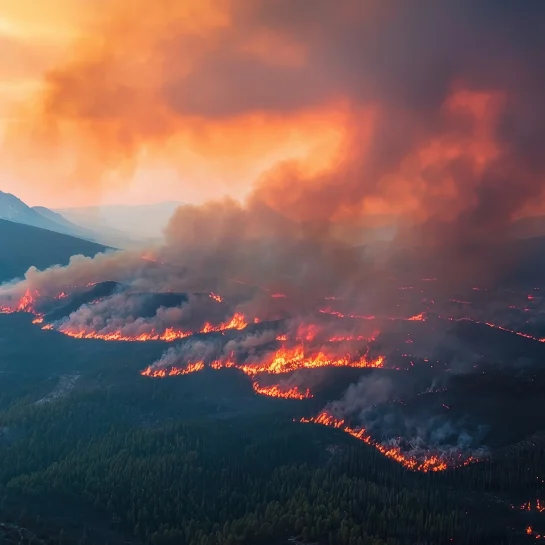
When conditions change quickly, customers need timely, reliable information about outages, evacuation risks, restoration efforts and what to expect next. For utilities serving wildfire-prone communities, that means emergency communications cannot depend on manual processes, disconnected systems or communications teams racing against the clock.
For one leading California utility serving more than 15 million customers across 50,000 square miles, modernizing emergency communications became an important part of strengthening wildfire readiness.
The utility serves a large and geographically diverse customer base, including many communities located in areas vulnerable to wildfires. As climate-driven disasters intensified, so did customer expectations for real-time updates across SMS, voice, email and connected devices.
But its existing, homegrown outage communication system made it difficult to respond at the speed emergencies demanded.
Data had to be manually pulled from multiple systems without a centralized dataset. Emergency campaigns required significant staff involvement, and communications teams faced challenges delivering targeted, consistent messages across channels.
The result was an emergency communication process that could take five staff members and five hours to deploy.
That delay created more than an operational burden. In an emergency, every minute between identifying an event and reaching affected customers matters.
The utility needed a way to move from manual response to automated, intelligent communication workflows.
The utility implemented Convey’s EONS to modernize its outage and emergency communications.
Purpose-built for utilities and regulated industries, EONS connects operational data with automated, multichannel communication workflows. Instead of requiring teams to manually coordinate data, audiences, channels and messaging for each event, EONS helps utilities activate communications based on real-time conditions.
For this California utility, that meant transforming a five-hour emergency campaign process into a workflow that could launch in about one hour.
The difference was not simply speed. The utility could also communicate more precisely.
Wildfires rarely affect an entire service territory in the same way. A communication strategy needs to account for geography, language, outage status and the specific circumstances of impacted customers.
With EONS, the utility could deliver:
This approach helped the utility reach the right customers with relevant information while reducing the operational effort required to manage each event.
The impact was measurable.
By replacing manual processes with automated emergency communication workflows, the utility achieved:
60% increase in staff productivity
Reducing the manual effort required to manage emergency communications.
80% faster campaign execution
Reducing emergency campaign deployment time from five hours to approximately one.
Real-time multichannel communication
Delivering outage updates through SMS, voice and email simultaneously.
More targeted outreach
Using geographic and language-based targeting to reach at-risk populations.
Reduced human error
Centralizing data, workflows and communications in a single system.
Greater operational visibility
Providing audit-ready reporting and real-time insights into communication activity.
These improvements gave the utility more than a faster way to send alerts. They created a more repeatable and scalable emergency communication process.
During a wildfire or other major emergency, customers are not simply looking for information. They are looking for reassurance that their utility understands what is happening and will keep them informed as conditions change.
That makes proactive communication part of the customer experience.
When customers receive timely updates without having to call for answers, utilities can help reduce uncertainty and give customer service teams more capacity to address the issues that require human support.
This is particularly important during major events, when inbound call volumes can increase rapidly.
The utility’s modernization effort helped shift emergency communications from a reactive, labor-intensive process toward a more proactive model built around timely, relevant information.
Wildfire preparedness does not begin when an emergency starts.
Utilities can use the same principles of automation, personalization and proactive engagement across preparedness communications, outage notifications, restoration updates and post-event follow-up.
That could include:
For more ideas on strengthening communications before, during and after severe weather events, explore Convey’s wildfire readiness playbook.
And because emergency communications operate within a complex regulatory environment, utilities also need processes that support compliance as they scale. Convey’s TCPA compliance resources offer additional guidance on managing communication preferences and regulatory requirements.
The utility’s results demonstrate what can happen when emergency communication is treated as an operational capability rather than a last-minute response.
By automating workflows, connecting real-time data and communicating across channels, the utility strengthened its ability to respond quickly while reducing the burden on staff.
The effort ultimately contributed to:
The utility was also recognized with the Gold Chartwell Outage Communications Best Practices Award for its approach to outage communications.
Wildfire risk will continue to challenge utilities and the communities they serve. The communications response needs to be ready before the next event begins.
Learn how Convey’s EONS can help modernize emergency and outage communications.
download
Open the full case study in a new browser tab.
Emergency communication is the process utilities use to keep customers informed during events such as wildfires, severe storms, extreme weather, outages and other emergencies. Effective emergency communication can include proactive alerts, outage updates, restoration information, safety messaging and follow-up communications delivered through channels such as SMS, voice and email.
Wildfire conditions can change rapidly, leaving customers with limited time to make decisions about safety, travel, evacuation or backup power. Proactive communication gives customers timely information without requiring them to contact the utility first.
Utilities can strengthen wildfire communications by connecting operational data to automated workflows, using geotargeting to reach affected customers, supporting multiple communication channels and languages, and creating repeatable communication templates for common emergency scenarios.
EONS helps utilities automate and manage outage and emergency communications across SMS, voice and email. It can use real-time operational information to trigger targeted communications, helping utilities reduce manual processes and reach affected customers more quickly.
Geotargeting allows utilities to communicate with customers based on their geographic location or affected service area. Instead of sending the same message to an entire service territory, utilities can provide relevant updates to customers in specific areas.
Yes. Multilingual communication can help utilities provide critical information to diverse customer populations. EONS supports translated messaging so utilities can reach customers with emergency information in relevant languages.
Automation can eliminate repetitive manual steps such as gathering data, identifying affected customers, preparing messages and coordinating communications across channels. This allows staff to focus on monitoring the event and managing more complex response activities.
Proactive updates can give customers information before they need to contact the utility, potentially reducing calls from customers seeking basic outage or restoration information. During large-scale events, this can help customer service teams focus on customers who need additional assistance.
The same communication infrastructure can support severe storms, extreme heat, winter weather, planned outages, restoration updates, billing communications, payment reminders and other customer engagement journeys.