

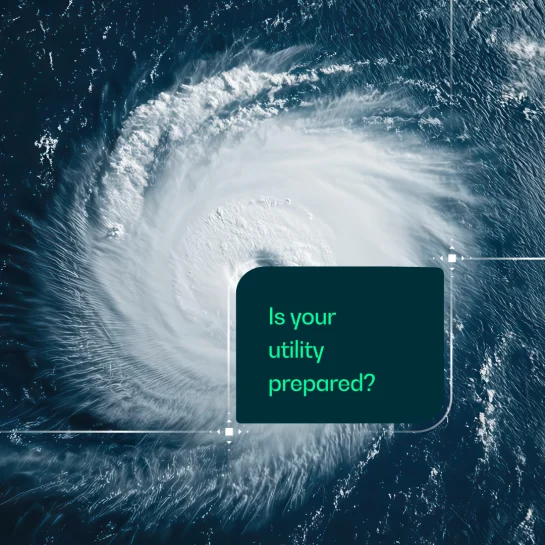

Is your utility prepared? The utility preparedness checklist that will move you toward the gold standard of storm communication

By Convey News
September 17, 2026 7 min read
Share this post
Is your utility prepared? The utility preparedness checklist that will move you toward the gold standard of storm communication
news icon
Is your utility prepared? The utility preparedness checklist that will move you toward the gold standard of storm communication

When a major storm is approaching, communication can be just as important as the response itself. Customers want to know what is happening, what they should expect, and what they need to do. For utilities, that means having a communication strategy that starts before the storm arrives, continues throughout the event, and extends into the recovery period.

But not every utility approaches storm communication in the same way. Some take a reactive approach, communicating only after an event is underway. Others have established processes for proactive alerts and consistent updates. The gold standard goes further, connecting preparedness, communication, customer engagement, internal execution, and post-storm follow-up into one coordinated strategy.

So, where does your utility stand?

Download now

Get your utility preparedness checklist

Get the practical checklist to help your team prepare for changing conditions and communicate with customers more proactively. Use it to identify key communication priorities, strengthen readiness, and help your utility stay prepared when it matters most.

The three levels of storm communication preparedness

A strong storm communication strategy can be viewed across three stages: reactive, standard, and gold standard.

The difference comes down to how early you communicate, how consistently you deliver information, how effectively you engage customers, and how prepared your teams are to execute when conditions change.

1. Reactive: communicating after the storm hits

A reactive approach means communication largely begins once a storm is already affecting customers. There may be limited proactive messaging ahead of an event, leaving customers with little information about what to expect. Once the storm arrives, inconsistent updates or messaging inaccuracies can create confusion and affect customer trust.

This approach can also contribute to lower participation and higher frustration. Customers may be unsure about what actions they should take, while utilities may experience increased pressure on customer service teams.

Internally, delays in cross-functional coordination and approvals can make it difficult to get information out quickly. And once the storm passes, communication often stops, with minimal follow-up for customers.

Reactive communication often looks like:

  • Limited proactive messaging before an event
  • Communication that begins primarily after the storm hits
  • Inconsistent updates
  • Messaging inaccuracies that can affect trust
  • Low customer participation
  • Increased customer frustration
  • Cross-functional delays and slow approvals
  • Minimal post-storm communication

A reactive approach can get information out the door, but it leaves little room to prepare customers or reduce the strain of an active event.

2. Standard: building a more proactive approach

A standard approach moves communication earlier in the process. Instead of waiting for a storm to impact customers, utilities send pre-event alerts with clear calls to action. Communication is also somewhat segmented, helping customers receive information that is more relevant to their situation.

During the event, utilities provide consistent updates through a primary channel, such as SMS, while maintaining inbound support for customers who need additional assistance. This approach also focuses more on customer education. Customers receive information about what to expect, which can increase participation and help create a more manageable customer service load during an event.

Internally, teams have greater functional alignment during the storm, making execution more coordinated. After the event, communication can also extend into billing awareness, helping customers understand what to expect following the storm.

A standard approach includes:

  • Pre-event alerts with clear calls to action
  • Moderate customer segmentation
  • Consistent updates through a primary communication channel
  • Inbound support for customers who need assistance
  • Customer education about what to expect
  • Moderate customer participation
  • A more manageable customer service load
  • Functional alignment during events
  • Post-event education, including bill awareness

This is a significant step forward. But utilities looking to reach the gold standard can take preparedness and coordination even further.

3. Gold standard: proactive, coordinated, customer-centered communication

The gold standard starts well before the storm arrives.

Rather than sending a single pre-event notification, utilities use multiple proactive messages, including communications 48 and 24 hours ahead of an anticipated event. These messages are tailored by geography and customer type, with clear calls to action that help customers understand what they need to know and do. Once the event is underway, communication remains accurate, validated, and consistent across channels.

That can include:

Using multiple channels gives customers more ways to receive important information while creating a consistent communication experience.

The gold standard also puts greater emphasis on self-service. Customers are given the information and tools they need to take action on their own, helping increase participation while reducing the amount of manual intervention required from utility teams. Behind the scenes, the communication strategy is supported by strong internal execution. Pre-approved templates, a defined war-room structure, and real-time data dashboards help teams coordinate during an event and respond as conditions change.

And communication does not end when the storm does.

Post-storm messaging provides customers with an impact summary, sets expectations around billing, and helps educate them about future preparedness. Importantly, that communication is delivered with empathy, recognizing that customers may still be dealing with the effects of the event.

The gold standard includes:

  • Multiple proactive messages, including 48- and 24-hour advance communications
  • Segmentation by geography and customer type
  • Clear calls to action
  • Accurate and validated messaging
  • Consistent communication across SMS, email, voice, web, app, and wallet
  • Self-service options for customers
  • High participation with minimal utility intervention
  • Pre-approved communication templates
  • A defined war-room structure
  • Real-time data dashboards
  • Post-storm impact summaries
  • Billing expectations and education
  • Empathetic communication focused on future preparedness

Preparedness is more than sending an alert

A storm communication strategy should not be measured solely by whether a message was sent. Preparedness is about what happens before, during, and after an event.

Before the storm, customers need timely information that helps them understand what is coming and what actions they should take.

During the storm, they need accurate, validated updates delivered consistently through the channels they use.

Internally, utility teams need the structure, information, and tools to execute quickly without unnecessary delays.

After the storm, customers need clarity around impacts, billing expectations, and how they can prepare for future events. The gold standard connects all of these pieces.

Where does your utility stand?

Every utility has different processes, resources, communication channels, and customer needs. But assessing where your current approach falls on the preparedness spectrum can help identify opportunities to strengthen your storm communication strategy.

Ask yourself:

  • Are we communicating proactively before a storm arrives?
  • Are our messages segmented by geography and customer type?
  • Do customers receive clear calls to action?
  • Are our messages accurate and validated across channels?
  • Can customers easily access information and serve themselves?
  • Are our internal teams aligned before and during an event?
  • Do we have pre-approved templates and a defined response structure?
  • Do our teams have access to real-time data?
  • Do we continue communicating with customers after the storm?
  • Are we helping customers understand what to expect from their bills?
  • Are we using post-storm communication to build preparedness for the next event?

The answers can help reveal whether your utility is primarily reactive, following a standard approach, or moving toward the gold standard.

Moving from reactive to prepared

Storms will always create uncertainty. Your communication strategy does not have to. Moving toward the gold standard means shifting from reactive communication to proactive, coordinated engagement. It means giving customers the information they need before, during, and after an event while giving internal teams a clearer structure for execution.

The goal is not simply to communicate more. It is to communicate earlier, more accurately, more consistently, and with greater empathy. For utilities, that can create a smoother experience for customers and a more coordinated approach for teams when it matters most.

Is your utility prepared? Talk with an expert and learn how you can reach the gold standard of communication with Convey.