Regulators are examining utility AI usage
Can you show your regulator what your AI told a customer? Artificial intelligence is quickly becoming part of how utilities…
November 16, 2026
11 min read


 Introducing ConveyIQ: A more intelligent way to power communication
Utilities and regulated industries are operating in
Read More Introducing ConveyIQ: A more intelligent way to power communication Message Broadcast is Now Convey
Message Broadcast rebrands as Convey, marking a
Read More Message Broadcast is Now Convey Convey acquires Selectron, expanding its engagement operating system with citizen engagement, field operations, and payments
Convey is excited to announce the acquisition
Read More Convey acquires Selectron, expanding its engagement operating system with citizen engagement, field operations, and payments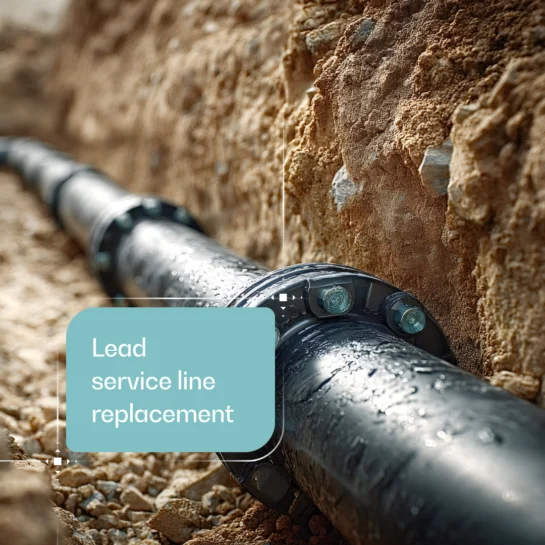


Water utilities across the country are facing one of the largest infrastructure challenges in decades. Millions of lead service lines still connect water mains to homes, putting residents at risk and creating an enormous undertaking for the utilities responsible for identifying and replacing them.
The challenge isn’t limited to the physical replacement of pipes. Before much of that work can happen, utilities need to identify which lines contain lead, verify unknown service line materials, communicate with affected customers, coordinate inspections, and organize the work required to move replacement programs forward.
Every unfinished or delayed task adds cost. Every missed appointment, unanswered notice, or manual follow-up creates more work for already stretched utility teams.
With the EPA’s Lead and Copper Rule Improvements (LCRI) establishing new requirements for service line inventories and replacement, utilities have an increasingly important question to answer: Are their current customer communication and service processes equipped to handle the work ahead?
An estimated 9 to 10 million lead service lines still connect water mains to homes across the United States.¹ These aging pipes represent a significant public health concern. There is no known safe level of lead in drinking water, and exposure can have serious consequences. In children, lead exposure can affect brain development, lower IQ, and contribute to learning and behavioral difficulties. In adults, exposure is associated with cardiovascular, kidney, reproductive, and other health problems.²
Replacing these lines is about more than meeting a regulatory requirement. It is an important investment in protecting the health of residents and the long-term safety of drinking water.
The EPA finalized the Lead and Copper Rule Improvements in October 2024, establishing requirements for water systems to replace lead and galvanized requiring replacement (GRR) service lines under their control, generally within 10 years of the rule’s November 1, 2027 compliance date. The rule also requires utilities to improve service line inventories, validate non-lead classifications, identify unknown lines, and develop comprehensive replacement plans.³
For most water systems, the general replacement deadline is December 31, 2037, although some states may establish earlier deadlines or systems may qualify for limited extensions.⁴
That leaves utilities with a substantial amount of work to plan, coordinate, and complete.
Identifying and replacing lead service lines is a complex process, particularly when a portion of the line is located on private property.
Utilities need accurate records of service line materials, but historical documentation is often incomplete. Unknown lines must be investigated and determining what is underground can require inspections, customer participation, and access to private property.
The LCRI requires water systems to submit an updated baseline inventory by November 1, 2027. This inventory must include updated service line information and connectors, with annual updates required afterward. Utilities must also identify the material of all unknown service lines by their applicable replacement deadline.³
Importantly, an unknown line does not automatically become a confirmed lead line when the baseline inventory is submitted. However, leaving those records unresolved creates a significant planning challenge. Utilities need a repeatable process for identifying materials, updating records, and prioritizing the work that follows.
And getting that information isn’t always easy.
Consider a study conducted by the EPA’s National Center for Environmental Economics in Trenton, New Jersey. Researchers tested whether door hangers encouraging residents to self-inspect their service lines could improve participation. Some households were even offered gift card incentives, including a $100 incentive.
The results were striking: participation remained well below 1% across the outreach groups. Even among households offered the $100 incentive, fewer than 1% completed a self-inspection.⁵
The findings highlight a difficult reality for utilities. Sending a notice or leaving information at someone’s door doesn’t necessarily translate into action.
Customers may not understand what is being requested, may have questions about the process, or may simply not know what to do next. And when the next step requires calling the utility, waiting for assistance, and coordinating an appointment, participation can become even more difficult.
Utilities also need to account for situations where access to a private-side service line requires property owner permission. Under the final LCRI, when consent is required, a utility must make a reasonable effort to obtain it. EPA defines that effort as at least four attempts to engage the property owner using at least two different communication methods.⁶
That creates another operational challenge: utilities need to do more than send messages. They need a reliable way to manage the interactions that follow.
A lead service line replacement program involves many individual steps, and each one creates opportunities for delays and unnecessary expenses.
Consider what happens when a utility needs to inspect an unknown service line:
Multiply that process across thousands of properties and the operational burden becomes substantial.
Every call requires staff time. Every appointment change creates additional administrative work. Every unsuccessful site visit puts pressure on field resources and replacement budgets. And every delay can leave another service line unresolved.
There is also the ongoing communication required throughout the program. Customers need to understand why their service line has been identified as lead or unknown, what the utility is doing about it, and what they should expect next. Annual notifications and program updates can generate additional inbound calls, particularly when residents are concerned about potential lead exposure.
The problem isn’t necessarily a lack of effort from utility teams. It’s that many of the processes involved still depend on disconnected communication channels, manual follow-up, and staff coordinating individual tasks.
The opportunity is to make each customer interaction do more than simply deliver information. It should help move the work forward.
Water utilities need a way to reach customers at scale while giving them a straightforward path to take action.
This is where Convey can help.
Before customers can complete a task, they need to know it exists and understand what they need to do.
Relay gives utilities a way to manage proactive customer communications across channels, including SMS, email, and voice. Outbound campaigns can be scheduled or triggered based on customer information, service events, and other relevant data.
For lead service line programs, this creates opportunities to reach specific audiences based on geographic areas, service line classifications, and program status.
Rather than relying solely on printed notices or door hangers, utilities can use targeted communications to explain the next step, share relevant information, and direct customers to an accessible way to complete a task.
But getting a message in front of someone is only the beginning.
Conversations takes customer communication a step further by allowing customers to complete more complex tasks through guided, two-way interactions.
Instead of asking a resident to call the utility to ask questions, schedule an inspection, or change an appointment, a message can direct them to a guided, secure web experience. Customers can access the information they need and complete the next steps without having to navigate multiple departments or wait for an employee to become available.
For lead service line programs, utilities could build workflows around tasks such as:
These interactions can be designed around the utility’s specific processes and connected to existing systems, including customer information, billing, CRM, and case management systems.
The result is a more connected process. Instead of sending a notice and waiting for someone to call, utilities can provide a direct path from communication to action.
And instead of having employees manually coordinate every interaction, teams can spend more time managing exceptions and the work that genuinely requires their attention.
The financial implications of improving these processes can be significant.
A replacement program is already a major investment. Utilities need to make the most of available funding, field resources, and staff capacity while managing the costs that ultimately affect the communities they serve.
Self-service automation can help reduce some of the avoidable expenses associated with managing that work.
Fewer unnecessary truck rolls. When customers can confirm appointments, receive reminders, and reschedule without calling, crews have a better opportunity to arrive when access is available and the work can be completed.
Less time spent on manual follow-up. Automated communications and guided workflows reduce the need for employees to repeatedly call customers, answer routine questions, and coordinate simple appointment changes.
More efficient customer participation. Giving residents a convenient way to understand the request and take action can help utilities move beyond one-way outreach and make it easier for customers to participate.
More organized information. Connecting customer interactions and workflow results to existing systems can help teams maintain more current records and reduce the manual reconciliation of calls, notes, and spreadsheets.
These improvements matter because the cost of a replacement program isn’t limited to the materials and labor required to install new pipes. It also includes the operational work needed to get each property ready.
Reducing friction at each step can help utilities make better use of their resources and keep projects moving.
The LCRI creates a long-term responsibility for water utilities, but the processes they build today will influence how efficiently they manage that responsibility in the years ahead.
The November 1, 2027 baseline inventory deadline is an important milestone. It requires utilities to bring together updated service line information, establish replacement plans, and prepare for the work that follows. The broader effort to identify unknown lines and replace lead and GRR service lines will continue well beyond that date.
There is also active litigation challenging the LCRI. Oral arguments took place on September 30, 2026, and a court decision is still pending.⁷ Utilities should continue monitoring regulatory developments while preparing for the requirements currently in effect.
For utilities, the question is not simply how many pipes need to be replaced. It’s whether the organization has the communication infrastructure and operational workflows to manage the work efficiently.
Convey helps utilities build that foundation. Relay provides the outbound communication capabilities to reach customers, while Conversations gives them a way to complete more complex tasks through guided self-service.
And getting started doesn’t have to mean transforming every process at once. Utilities can begin with one workflow, such as inspection scheduling or appointment reminders, measure the impact, and expand as their needs evolve.
Conversations is designed for a straightforward, partnered implementation, with an API-first architecture and typical deployment timelines of 30 to 60 days, depending on the scope and integration requirements.⁸
Lead service line replacement is too important, and too expensive, to let avoidable administrative work slow it down. The utilities that invest in better customer workflows now will be better positioned to manage the work ahead, make the most of their resources, and deliver safer drinking water to their communities.
Meet with a Convey expert and see how you can help your utility simplify customer interactions and move complex service workflows forward in order to meet the needs of the upcoming lead replacement deadlines.
The LCRI is an EPA regulation finalized in October 2024 to strengthen protections against lead in drinking water. It requires water systems to update service line inventories, identify unknown service line materials, develop replacement plans, and replace lead and galvanized requiring replacement service lines under their control, generally within 10 years of the November 1, 2027 compliance date.
November 1, 2027 is the compliance deadline for the LCRI baseline service line inventory and replacement plan, along with other applicable requirements. Utilities must continue updating their inventories and identifying unknown service lines after this milestone.
Utilities need accurate information about service line materials to prioritize inspections, plan replacements, and allocate resources. Unknown lines create uncertainty in replacement planning and require additional investigation. Identifying these lines earlier can help utilities better organize their programs and avoid unnecessary delays.
Effective communication helps utilities explain inspection requirements, answer customer questions, coordinate appointments, and keep residents informed throughout the process. Moving beyond one-way notices to interactive, self-service workflows can make it easier for customers to participate while reducing manual follow-up for utility employees.
Convey combines Relay’s outbound communication capabilities with Conversations’ guided, two-way self-service workflows. Utilities can use Relay to reach targeted customer groups through text, email, and voice, then direct residents to Conversations to complete more complex tasks, such as coordinating inspections, managing appointments, and accessing program information. These workflows can integrate with existing utility systems to support more connected operations.
Read other insights and news from the Convey team.
Can you show your regulator what your AI told a customer? Artificial intelligence is quickly becoming part of how utilities…

For utilities, affordability has traditionally been addressed through payment assistance programs, budget billing options, and flexible payment arrangements. While these…
The FCC is changing how consumers can revoke their consent to automated phone calls and texts. As of April 11,…