




Storm preparedness playbook for utilities: A strategic guide for utilities to prepare, respond, and communicate during severe weather events

By Convey News
August 24, 2026 20 min read
Share this post
news icon
Storm preparedness playbook for utilities: A strategic guide for utilities to prepare, respond, and communicate during severe weather events

Storm preparedness is about more than restoring power. It is about protecting public safety, maintaining essential services, communicating clearly, and preserving the trust and confidence of the communities utilities serve.

Across North America, storms and severe weather events are increasing in both frequency and intensity, resulting in widespread property damage, extended power outages, and heightened threats to public safety. From hurricanes and tropical storms along the Gulf and Atlantic coasts, to wildfires in the West, to ice storms and tornadoes in the Midwest and South, every region faces unique and evolving risks.

The impact of a major storm is measured not just by the damage it causes, but by how quickly and effectively a utility can respond. The difference between a swift recovery and prolonged disruption often lies in the quality of preparation and the ability to respond efficiently.

For utilities, storm impacts are not solely measured in infrastructure damage or outage duration. They are also defined by the ability to protect public safety, maintain essential services, save lives, and preserve the trust and confidence of the communities they serve. Utilities that lead in storm preparedness demonstrate a commitment to operational excellence, community safety, and transparent communication. Proactive planning, rigorous training, and the integration of technology can minimize downtime, accelerate restoration, and support vulnerable populations when it matters most.

Human-centered communication strategies, delivered across multiple channels and tailored to local needs, are essential for keeping customers informed, reducing anxiety, and empowering individuals to act before, during, and after severe weather events. For utilities, this means storm preparedness needs to extend across the entire event lifecycle: preparation, response, and recovery. Convey’s engagement operating system for utilities and regulated industries brings intelligent workflows, communication, and customer engagement together to support those critical moments.

Why storm preparedness matters

Storm preparedness should support utilities of all sizes and geographies, whether preparing for hurricane season, wildfire threats, winter storms, or unexpected outages.

A strong storm preparedness strategy can help utilities:

  • Build operational resilience through proactive protocols and cross-functional coordination.
  • Leverage intelligent workflows and High Throughput communication platforms for rapid, compliant outreach.
  • Deliver consistent, empathetic, and accessible messaging to diverse communities.
  • Strengthen customer trust and satisfaction through transparency and reliability.
  • Position the organization as a leader in disaster readiness and community resilience.

Readiness is not just about restoring power. It is about being a pillar of stability and support when customers need it most.

1. Start with internal utility readiness

A utility’s ability to deliver a rapid and effective storm response begins well before a forecast is issued.

Operational resilience requires preparation, training, coordinated infrastructure, and team management. That starts with established protocols, frequent drills, pre-approved communication messaging, and the integration of technology and personnel.

Establish response protocols

Utilities should develop and maintain detailed response protocols that outline specific actions for various emergency scenarios. These protocols should be reviewed and updated regularly to reflect evolving risks and lessons learned from previous events.

Conduct frequent drills and simulations

Regular, realistic drills are essential for validating emergency plans and preparing teams to act decisively under pressure.

Scenario-based exercises, such as simulating a major hurricane, extended outage, or load-shed event, help teams:

  • Practice coordination.
  • Test communication workflows.
  • Identify areas for improvement.

Integrate technology and train key personnel

Seamless integration of technology platforms with field and operations teams enables real-time situational awareness and streamlined resource deployment.

Automated alerting systems, crew tracking, and digital dashboards can support faster decision-making and enhance overall response capabilities.

Coordinate cross-functional teams

During crisis conditions, utilities need aligned decision-making workflows across departments.

A clear incident command structure, shared situational dashboards, and regular team check-ins can help operations, communications, and customer support teams remain aligned throughout an event.

A well-defined incident command framework includes:

  • Clear escalation paths between operations and communications teams.
  • Shared situational awareness dashboards.
  • Regular check-ins with mutual aid partners to align response strategies.

Prepare for load shed and proactive conservation appeals

During periods of grid stress, utilities must be prepared to implement load shed protocols and promote conservation to protect system stability.

Utilities should:

  • Develop RED/BLACK alert escalation frameworks.
  • Establish a tiered alert system, such as RED for voluntary conservation and BLACK for mandatory load shedding.
  • Create pre-approved, templated messages for conservation appeals and outages.
  • Maintain a library of ready-to-send messages for different channels and customer groups.
  • Conduct annual script reviews before each storm season.

Operational resilience starts before the forecast with proactive protocols to keep internal teams prepared, minimize downtime, and accelerate restoration when it matters most.

Support employees and establish mutual aid

Storm response places significant physical and emotional demands on employees. Utilities should prioritize employee well-being through mental health resources, resilience training, and fatigue management protocols.

Utilities should also establish and periodically review mutual aid agreements with neighboring utilities to provide rapid access to additional crews, equipment, and expertise during large-scale emergencies.

Annual and pre-season drills can simulate high-impact events such as Category 4+ hurricanes, multi-day outages, and load-shed emergencies while validating:

  • Emergency communication workflows.
  • Mutual aid coordination.
  • System failover capabilities.

The playbook cites Entergy’s “Storm University,” which ran test simulations for load shed with Convey from 2021-2022, deploying more than 1 million messages in under 15 minutes to test High Throughput communication systems.

Plan ahead

Storms do not wait.

When every minute counts, having a clear roadmap reduces confusion and delays. Customers expect updates quickly, and regulatory reporting begins the moment the storm hits.

Utilities should establish:

  • A storm lead.
  • A primary storm team.
  • An alternate team that can provide relief.
  • A designated alternate work site if the primary office is impacted.
  • A storm messaging walkthrough with designated teams and alternates.
  • A process for identifying and fixing gaps.
  • A review of previous storm scripts.
  • A review of whether scripts remain relevant after infrastructure changes.

The goal is simple: follow the exact process you would follow for a real storm before a real storm occurs.

2. Use technology to improve crisis efficiency

Technology plays a central role in helping utilities respond with speed, scalability, and regulatory compliance while maintaining a human-centered approach.

Convey’s engagement operating system brings intelligent workflows and communication capabilities together to support rapid, compliant messaging during emergencies.

Convey’s intelligent workflows include pre-loaded NERC/FERC-approved scripts for rapid deployment and automated compliance checks, helping utilities get messages out quickly while meeting industry standards.

High Throughput communication capabilities can manage high-volume communication needs, delivering more than one million alerts per hour during crises with intelligent pacing algorithms designed to support delivery during peak demand.

Dynamic segmentation allows utilities to tailor messages based on:

  • Customer language preferences.
  • Geographic location.
  • Vulnerability status.

Capacity management by outage severity and dynamic segmentation by location, language preference, and vulnerability status allow utilities to take a targeted approach and deliver critical updates to the people who need them most.

By integrating these capabilities, utilities can respond to emergencies with speed, precision, and empathy, delivering the right message to the right people at the right time.

Learn more about Convey’s emergency outage communications

3. Build trust through transparency and consistency

Consistent, transparent communication is the foundation of customer trust during storm events. Customers should never be left wondering about the status of their service or restoration efforts. Regular, scheduled updates, even when there is no new information, provide reassurance and demonstrate a utility’s commitment to transparency.

Just as important, utilities should set and meet clear expectations. If customers are told they will receive an update within a certain timeframe, delivering on that promise establishes the utility as a dependable partner, even in the face of uncertainty.

Make communication part of the storm response strategy

A strong storm communication strategy should:

  • Make communication a core part of the overall storm response strategy.
  • Include a robust library of scenario-based messages covering every phase of a storm.
  • Support rapid, targeted outreach.
  • Enable two-way engagement so customers can ask questions or report issues in real time.
  • Train teams to respond with empathy and clarity.
  • Maintain a consistent brand voice across touchpoints.

Use operational visibility to monitor performance

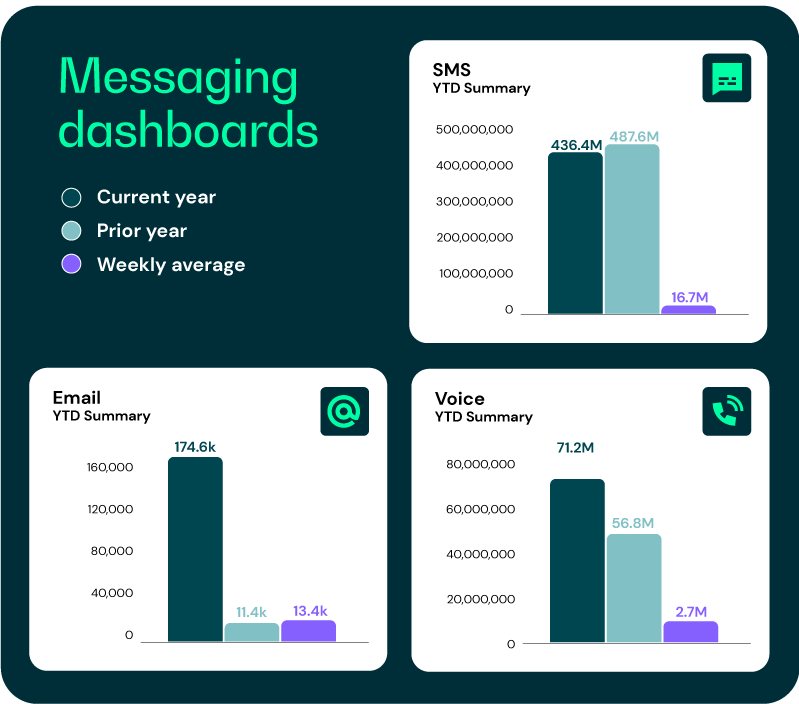
Messaging dashboards for one utility's storm response with Convey

Real-time dashboards can display message volume, segmentation breakdowns, and delivery success rates.

This visibility allows utility teams to monitor campaign effectiveness, adjust strategies during an event, and support continuous improvement in crisis communications.

Empathetic messages also matter. Acknowledging the stress and inconvenience storms cause is a human-centered approach that can foster goodwill and reduce frustration.

4. Communicate proactively before the storm

Utilities should launch pre-storm campaigns as soon as a threat is forecasted, escalating the cadence as landfall approaches.

Before a storm, utilities should distribute a comprehensive customer preparedness checklist across channels such as SMS, email, and web. Materials should be accessible to customers with disabilities and follow CDC and ADA recommendations.

A multi-channel approach can include:

  • SMS.
  • Two-way chat conversations.
  • Email.
  • IVR.
  • App notifications.
  • Digital signage.

Segmentation by geography, customer type, and vulnerability status can make messaging more targeted and relevant.

72+ hours before the storm

Communications can include:

  • Storm preparation checklists covering water, batteries, chargers, non-perishable food, medications, critical documents, pet supplies, and hygiene items.
  • Property protection tips, such as securing outdoor items, trimming trees, and installing storm shutters.
  • Energy conservation guidance, including adjusting thermostats, unplugging devices, and delaying appliance use.

24-48 hours before the storm

Communications can include:

  • Evacuation orders.
  • Generator safety.
  • Flood avoidance, including “Turn Around, Don’t Drown.”
  • Reminders to charge devices.
  • Emergency contact preparation.

When landfall is imminent

Communications should focus on:

  • Shelter-in-place guidance.
  • Generator safety.
  • Final property and personal safety reminders.
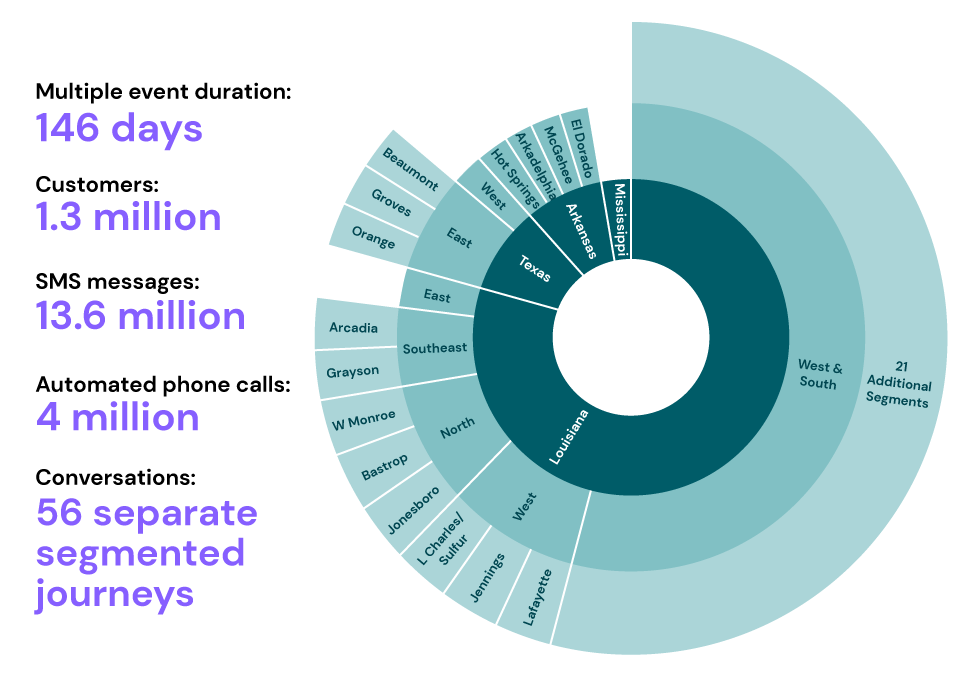
A graph of a segmented approach one utility used in 7 back-to-back storms
When hit by seven back-to-back storms, one large utility implemented Convey’s solutions to deliver timely notifications at scale to over 1.3 millions customers. The utility used proactive messaging throughout the duration of multiple storms, making sure their customers were informed and safe. After this event, the utility earned a Net Promoter Score of +37, with customers touting its service and outage response.

5. Communicate in real time during the storm

Personalization and accessibility are important throughout the process. Utilities should translate communications into customers’ preferred languages and use geolocation and segmentation so messages are relevant and actionable for each recipient.

When severe weather strikes, utilities must prioritize safety, clarity, and transparency in every customer interaction.

The ability to deliver timely, accurate, and empathetic communications at scale across multiple channels is essential for protecting lives, maintaining trust, and supporting operational efficiency.

Meet customers where they are

Different customer segments respond to different channels. A multi-channel communication strategy helps utilities deliver critical updates in the formats customers prefer.

  • SMS delivers immediate alerts and is well suited for urgent safety and restoration updates. Text-based alerts can also provide accessible information for customers who are hearing impaired or have speech disabilities.
  • IVR and voice calls can support seniors, customers with visual impairments, or customers who prefer auditory updates.
  • Email is useful for detailed updates, safety tips, and resource links.
  • App or push notifications and digital signage provide real-time information in public areas, shelters, and community centers.
  • Two-way chat conversations enable customers to self-serve with workflows for billing questions, outage reports, and service requests while utility teams focus on complex cases.

Messages should be routed based on customer preferences so the right information reaches the right audience at the right time.

Move from one-way alerts to two-way engagement

A modern emergency communication strategy goes beyond broadcasting information. It empowers customers to respond, report, and interact with their utility in real time.

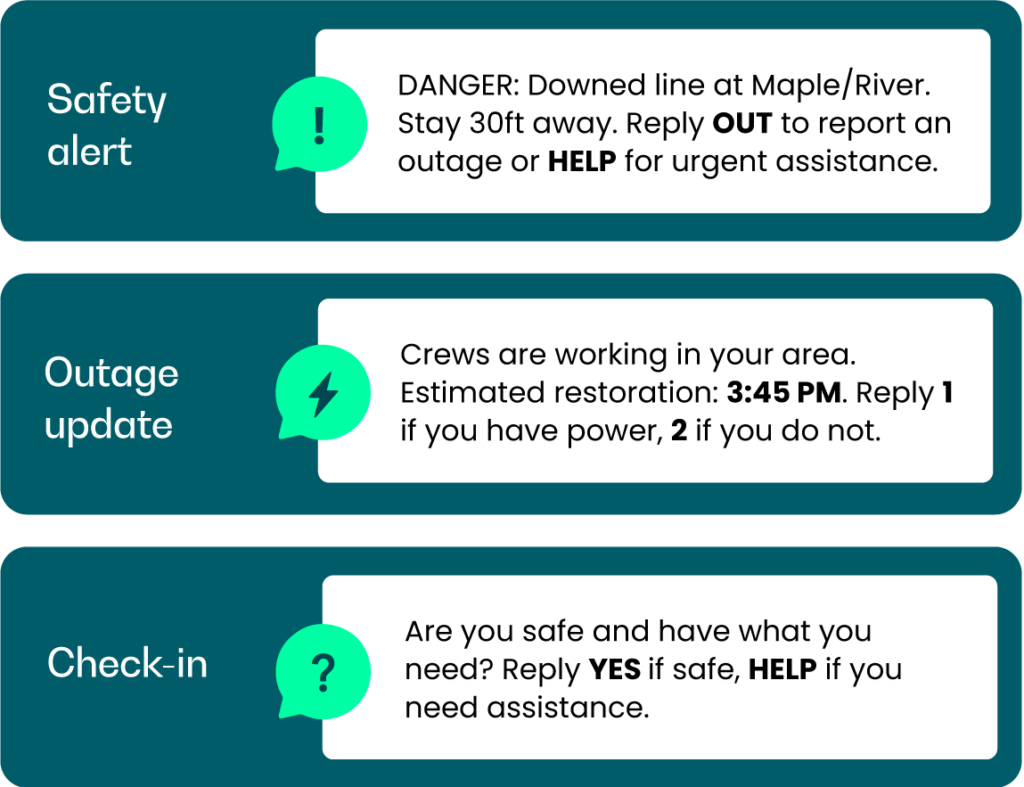
Example messages that utilities use Convey to send in real-world situations

Two-way communication can allow customers to:

  1. Report downed lines or hazards instantly.
  2. Confirm their safety or request wellness checks.
  3. Receive personalized restoration estimates and updates based on their address or account status.

This creates a continuous flow of information between the utility and the customer.

Learn more about Convey’s AI-driven, two way conversation solution

Personalize communication for every community

No two communities are the same.

Equitable access to storm information requires translation and accessibility features. Utilities need communication strategies that can support customers who are hearing impaired, visually impaired, or have limited English proficiency.

Location-based messaging can target specific neighborhoods, business districts, or vulnerable populations so the right people receive the right information at the right time.

Accessibility also matters across channels. SMS can provide clear, accessible information without relying on audio, while IVR and voice calls can support customers who prefer or require auditory updates.

Example two-way storm messages

Example two-way messages that Convey utilities use in real-world scenarios

Safety alert: DANGER: Downed line at Maple/River. Stay 30ft away. Reply OUT to report an outage or HELP for urgent assistance.

Outage update: Crews are working in your area. Estimated restoration: 3:45 PM. Reply 1 if you have power, 2 if you do not.

Check-in: Are you safe and have what you need? Reply YES if safe, HELP if you need assistance.

These types of interactions can give utilities faster visibility into customer needs while helping customers receive information and support during a stressful event.

6. Build a two-way storm communication workflow

Two-way engagement can transform storm response from a one-way alert system into a dynamic, customer-driven conversation.

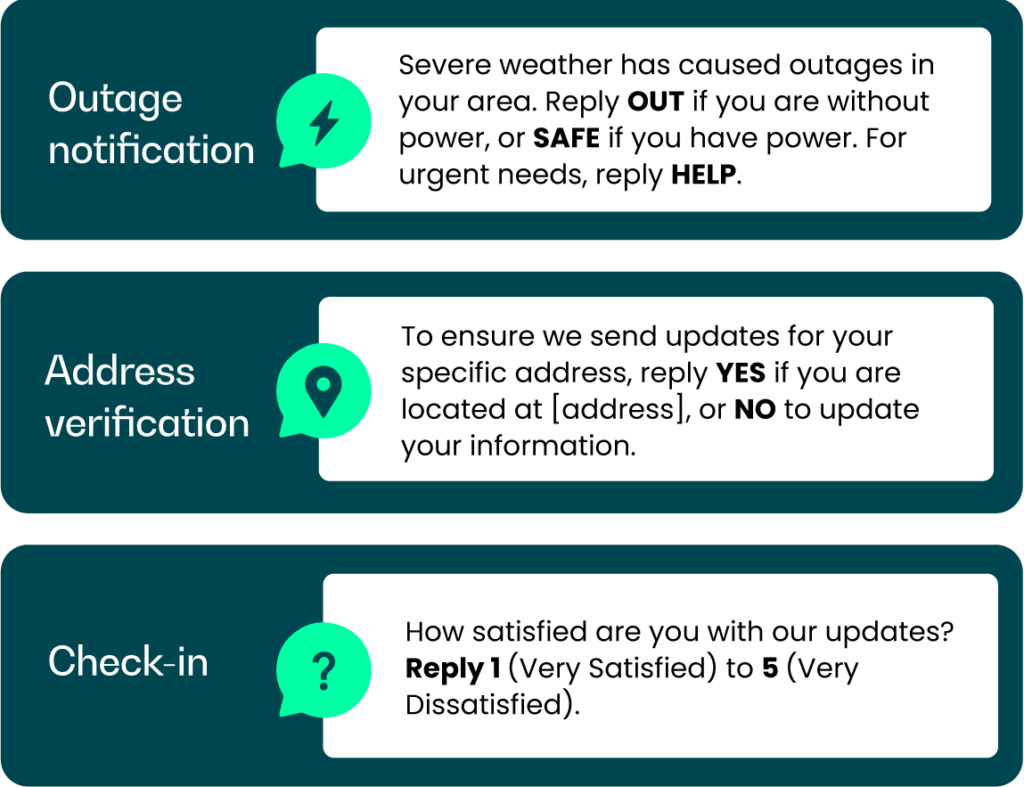
A sample workflow can begin with an outage notification: Severe weather has caused outages in your area. Reply OUT if you are without power, or SAFE if you have power. For urgent needs, reply HELP.

From there, utilities can verify the customer’s address: To send updates for your specific address, reply YES if you are located at [address], or NO to update your information.

The workflow can then gather customer feedback: How satisfied are you with our updates? Reply 1 (Very Satisfied) to 5 (Very Dissatisfied).

This type of workflow can support faster damage assessment, enhanced customer safety and welfare, continuous feedback, and stronger trust and transparency.

Faster damage assessment

When customers can quickly report outages, downed lines, or hazards through SMS, apps, or web portals, utilities gain immediate, location-specific insights.

That crowdsourced information can help dispatch crews more efficiently, prioritize restoration efforts, and reduce downtime for affected areas.

A continuous feedback loop

Real-time customer feedback, including restoration confirmations, satisfaction ratings, and communication preferences, can help utilities refine messaging cadence, content, and channel mix throughout the storm lifecycle.

Enhanced safety and welfare

Two-way communication can allow utilities to check in with customers, particularly those identified as vulnerable or medically dependent.

Customers can confirm their status or request urgent assistance, giving utilities the opportunity to identify and support those most at risk.

Building trust

By inviting and acting on customer input, utilities demonstrate responsiveness and accountability, strengthening trust and fostering a sense of partnership with the community.

7. Communicate clearly about conservation and load shedding

Public participation is essential to grid stability.

Load shedding and energy conservation are not just utility mandates. They are shared responsibilities. During periods of high demand or severe weather, utilities can empower customers with targeted, timely campaigns that encourage energy-conscious behavior and build community-wide resilience.

There are two distinct types of crisis communications related to grid stability: conservation and load shedding.

Always communicate conservation appeals first as a proactive measure.

If load shedding becomes necessary, utilities should clearly explain the transition from voluntary conservation to required outages so customers understand the progression and the reasons behind each action.

Suggested conservation messages include:

  • Raise thermostats to 78°F or higher during extreme heat to reduce HVAC load.
  • Delay large appliance use such as washers, dryers, and ovens until off-peak hours.
  • Unplug electronics that draw “phantom load” even when not in use.
  • Use ceiling fans to circulate air instead of lowering the thermostat.
  • Turn off unnecessary lighting in unoccupied rooms.

These small actions, when adopted collectively, can reduce strain on the grid and foster a sense of shared responsibility in preserving essential services.

Example conservation appeal

There is a high demand for electricity in our area due to extreme weather conditions. To help avoid periodic outages, we are asking all customers to voluntarily reduce their electricity usage now. Please help by adjusting thermostats and turning off non-essential lights, electronics, and large appliances. We apologize for any inconvenience. For more information and updates, visit [utility URL].

Example load-shedding message

To maintain system reliability and protect critical services such as hospitals and emergency responders, we are implementing brief, rotating outages in your area. These outages are necessary due to extreme demand on the grid. We expect power to be restored within approximately 2 hours. For more information and updates, visit [utility URL].

8. Scale communication with High Throughput

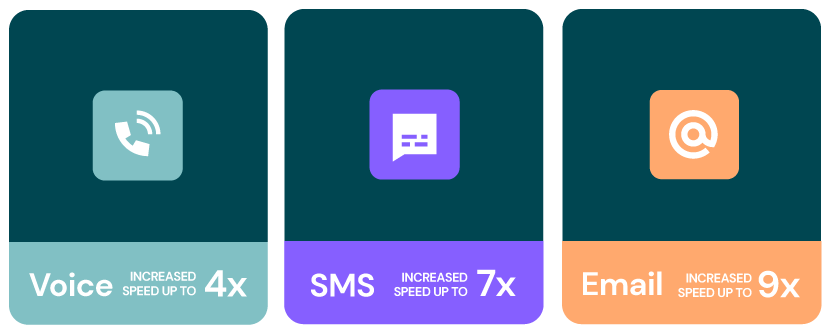
High throughput with Convey increases messaging capabilities with the industry's highest throughput
Real-time results with Convey’s High Throughput solution, the highest throughput capabilities in the industry.

During a major storm, communication volume can increase dramatically. Convey’s intelligent workflows enable utilities to automate the deployment of safety alerts, outage notifications, and restoration updates as conditions evolve.

High Throughput technology can reach more than one million recipients within minutes, supporting critical communications even during network congestion or peak demand. The goal is not simply to send more messages. It is to maintain a disciplined, human-centered communication strategy supported by two-way engagement, accessible channels, and High Throughput automation.

This approach can reduce confusion, accelerate restoration, and reinforce the utility’s role as a trusted partner in community safety and resilience.

9. Support customers after the storm

Storm communication does not end when the weather clears. Once the storm passes, utilities must move quickly to assess damage, restore service, and continue communicating with customers.

Post-storm priorities include:

Damage assessment and restoration sequencing

Rapid assessment and real-time data collection can support restoration sequencing. Priorities may include critical infrastructure first, followed by high-density residential clusters and rural areas.

Ongoing customer updates

Utilities should maintain a steady cadence of communications about:

  • Restoration progress.
  • Safety reminders.
  • Billing or service support for impacted customers.
  • Billing pauses or deferred payments.
  • “All clear” notices.
  • Return-to-service instructions.

Pre-approved templates can help utilities maintain consistency throughout this phase.

Community support and resource coordination

Utilities can work with FEMA, the Red Cross, and local agencies to distribute resources and information about shelters, food, and mental health services.

Two-way messaging can also allow customers to report ongoing hazards or request additional support.

Communicate about billing impacts

After major storms, utilities should proactively educate customers about rate changes, energy usage, and available assistance programs. AMI data and personalized dashboards can support targeted high-bill alerts that help customers understand and manage their usage. Transparency about billing impacts is key to building lasting customer loyalty and confidence in utility storm response.

An example billing message from the playbook: We’ve paused billing for storm-impacted customers. Need flexibility? Call [number] or visit [link]

After a storm, clear communication about billing pauses, payment assistance, and support resources is essential for customer trust.

10. Use every storm as an opportunity to improve

Every event is an opportunity to improve. Post-storm performance analysis should include an audit of message delivery metrics, customer engagement rates, and call center volumes to identify gaps and successes.

Utilities can also:

  • Compare predicted versus actual restoration timelines.
  • Review incident command and escalation protocols.
  • Update and expand the messaging library annually.
  • Add new scenarios such as wildfires, winter storms, and cyber threats.
  • Refine communications based on regulatory changes and customer feedback.
  • Conduct post-event surveys such as NPS or CSAT.
  • Use customer feedback to refine messaging cadence, script content, and communication workflows.

Storm preparedness best practices: A quick round-up

The playbook’s recommendations come down to seven core practices:

1. Start early

Launch pre-storm communications as soon as a threat is identified.

2. Maintain cadence

Use a consistent, scenario-based messaging cadence before, during, and after the storm.

3. Test and refine

Conduct regular drills and scenario testing to validate workflows, templates, and escalation protocols.

4. Humanize every interaction

Prioritize empathy, clarity, and trust in every message, especially during high-stress events.

5. Leverage smart technology

Use intelligent workflows to automate, personalize, and measure interactions. Integrate FAQ chatbots and support tools to resolve common questions quickly and efficiently.

6. Promote digital self-service

Provide digital self-service options for outage tracking, bill payment, and usage monitoring.

7. Keep improving

Audit every event, analyze performance data, and refine strategies to improve future storm response.

The power of proactive outreach

Every severe weather event, whether a hurricane, winter storm, wildfire, or flood, reminds us that nature’s unpredictability is a constant in the utility industry.

What distinguishes leading utilities is not the ability to prevent storms, but the ability to anticipate, communicate, and empower communities before, during, and after disaster strikes.

Proactive, transparent communication is one of the most effective tools utilities can use to protect customers, support first responders, and strengthen public trust.

Advanced technology, multi-channel outreach, and inclusive messaging allow utilities to provide timely, actionable information across location, language, and accessibility needs.

For utility leaders, proactive outreach is more than a regulatory requirement. It is a cornerstone of community resilience. By framing preparedness guidance and fostering a culture of trust, utilities empower customers to take meaningful action and reinforce their role as reliable partners in times of crisis.

What the future of utility storm response looks like

The future of utility storm response is clear:

  • Anticipate threats, communicate early, and maintain a steady cadence of updates.
  • Leverage every channel, including SMS, IVR, email, apps, and digital signage, to maximize reach and accessibility.
  • Embrace innovation and feedback while continually improving the customer experience.

Operational excellence is built on:

  • Preparedness: Robust protocols, regular drills, and mutual aid partnerships.
  • Technology: Intelligent workflows and High Throughput platforms capable of delivering millions of alerts to segmented audiences.
  • Customer-centric messaging: Accessibility, empathy, clarity, and communications tailored to diverse communities.
  • Two-way engagement: Giving customers ways to report outages, request assistance, and provide real-time feedback while creating a continuous flow of information.
  • Continuous improvement: Auditing every event, analyzing performance data, and refining strategies for future storm response.

While you cannot control the weather, you can control the message. With every alert sent, every update shared, and every question answered, you are not just restoring power. You are restoring confidence, safety, and hope for the communities you serve.

How prepared is your organization?

Ask yourself these seven questions before the next storm season:

  1. Are we proactively communicating with customers before, during, and after a storm using the channels they prefer?
  2. Do our messages provide clear, actionable guidance that helps customers stay safe and prepared, not just service updates?
  3. Is our storm communication plan tested, current, and supported by automated technology for speed, scale, and compliance?
  4. Have we tailored our outreach to accommodate vulnerable populations, diverse languages, and accessibility needs?
  5. Do we have a strategy for educating customers on energy conservation and grid support during peak demand and outages?
  6. Are we set up to gather real-time feedback and outage reports to accelerate response and restoration?
  7. After a storm, do we consistently review our performance and update our approach based on customer engagement and outcomes?

If the answer to any of these questions is no, the next storm season is an opportunity to strengthen your approach.

Get in touch with Convey’s storm prep experts and get a free consultation on where your emergency storm communication needs more support.

Prepare for the next storm with Convey

Convey’s engagement operating system helps utilities bring intelligent workflows, multi-channel communication, two-way engagement, and operational visibility together across the storm lifecycle.

From proactive preparedness messaging to real-time outage communication, customer check-ins, safety alerts, and post-storm engagement, the goal is to help utilities stay connected with the communities they serve when communication matters most.

Understand Convey’s emergency outage communication solution

Explore two-way Conversations

Explore omnichannel communication for utilities of all sizes

Learn about Convey’s outage management solutions

Explore more utility resources from Convey

Download now

Get the full Storm preparedness playbook

For the complete strategic guide, including the recommended customer-facing communications, storm kit guidance, property protection tips, energy conservation recommendations, and preparedness questions, download the full Storm preparedness playbook.