


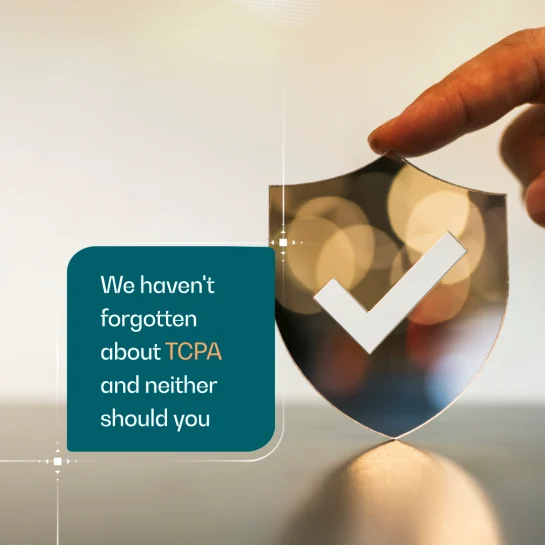


We haven’t forgotten about upcoming TCPA changes and neither should you

By Convey News
August 24, 2026 9 min read
Share this post
news icon
We haven't forgotten about upcoming TCPA changes and neither should you

If it feels like TCPA has been on your compliance to-do list for a while, you’re not alone. Over the past few years, organizations have had to navigate evolving requirements around consent, opt-outs, revocation requests, and customer communications. And while some deadlines have shifted, TCPA compliance is not going away.

In fact, another important deadline is now on the calendar. The Federal Communications Commission (FCC) has extended the effective date of a key TCPA revocation requirement to January 31, 2027. The requirement addresses how organizations must handle a customer’s revocation of consent across different types of communications.

If you’ve been following the conversation, this isn’t the first time we’ve talked about TCPA at Convey. We previously covered the evolving requirements in our TCPA regulations webinar, including what organizations needed to know about the changing consent and revocation rules.

The timeline has changed. The need to prepare hasn’t. As always, organizations should consult their legal counsel regarding compliance with the TCPA and related regulations.

What changed with the January 2027 deadline?

The FCC’s TCPA rules give consumers the ability to revoke consent to receive certain robocalls and robotexts through reasonable means. Existing rules already require organizations to honor qualifying revocation requests within a reasonable period, not to exceed 10 business days.

The rule at the center of the January 2027 extension goes a step further.

Under the requirement, when a consumer revokes consent in response to one type of informational communication, that revocation can apply to future robocalls and robotexts from the same organization on unrelated matters.

For example, imagine a customer receives a text about a billing issue and replies with an opt-out request. Under the broader revocation requirement, that request could affect the organization’s ability to send other consent-based communications to that customer, even when those communications come from a different business unit or relate to a different topic.

This is where compliance becomes more complicated than simply recognizing “STOP.”

Organizations need to know who the customer is, what consent they provided, what they have revoked, when they revoked it, and which communications that revocation affects.

The FCC extended the effective date of this specific requirement to January 31, 2027 while it considers whether the rule should be modified. The extension does not eliminate or delay other TCPA requirements related to consent and revocation.

For a deeper look at what the evolving rules mean operationally, check out our TCPA compliance webinar on moving from rules to readiness.

TCPA compliance can easily become fragmented across departments, communication platforms, databases, and vendors.

A customer may interact with billing today, customer service tomorrow, and an emergency communications program next week. If each team manages consent and revocation independently, it becomes difficult to maintain a complete picture of that customer’s communication preferences.

And this isn’t an issue limited to utilities. Financial services organizations, healthcare organizations, insurance companies, government agencies, and other regulated industries rely on automated calls and text messages to communicate with the people they serve. The more complex the organization, the more difficult it can become to manage consent consistently. For regulated organizations, compliance needs to be part of the communication workflow itself.

That means moving beyond questions like:

“Did this customer opt out?”

and toward:

“What communications can this customer receive right now, based on their current consent and revocation history?”

That distinction matters.

The January 2027 deadline is an opportunity to look at your process

The extension gives organizations additional time, but it shouldn’t be viewed as a reason to put TCPA planning on hold. Instead, use the time to evaluate how your organization currently manages consent and revocation.

Start by asking:

  • Where are consent and revocation records stored?
  • Are opt-outs managed centrally or independently by business unit?
  • How quickly are revocation requests processed?
  • Can one team see a revocation captured by another team?
  • Are SMS and voice communications governed by the same compliance process?
  • How are revocation requests documented?
  • Can your team demonstrate when a customer opted out and how that request was handled?
  • What happens when a customer uses a method of revocation that doesn’t fit your standard process?
  • How do your internal systems and communication vendors share consent information?
  • Can your current process scale as communication volumes and regulatory requirements change?

If you’re not sure where to start, our TCPA checklist can help your team work through the key areas to evaluate as you prepare for evolving requirements.

The goal isn’t simply to check a compliance box. It’s to understand where your current process works, where it relies on manual intervention, and where there may be gaps.

From manual opt-outs to automated compliance

This is where ENFORCE comes in.

ENFORCE is Convey’s automated compliance management solution designed to centralize consent revocation across SMS and voice communications. Instead of relying on disconnected processes, ENFORCE creates a centralized, audit-ready record of revocations and applies communication rules in real time.

It can check contacts against factors including number validity, porting, line type, Do Not Call status, blocked numbers, and channel-specific revocation history. The goal isn’t simply to add another compliance tool. It’s to make compliance part of the communication process.

With ENFORCE, organizations can:

Centralize revocation data

Bring consent revocation information into a single database so teams have greater visibility into customer preferences across communication programs.

Automate compliance checks

Apply consent and revocation rules before communications are sent instead of relying on manual processes to catch issues afterward.

Keep records audit-ready

Maintain a trackable history of revocations and compliance activity, making it easier to understand what happened and when.

Support multiple communication channels

Manage compliance across SMS and voice communications while accounting for different communication requirements.

Reduce manual work

Automating revocation processes can reduce errors, eliminate repetitive manual reviews, and give teams more time to focus on customer communications and other priorities.

TCPA compliance doesn’t happen in one department

One of the biggest challenges with TCPA compliance is that the responsibility often crosses organizational boundaries.

Marketing may manage one communication program. Customer service may manage another. Billing may have its own notifications. Emergency communications may operate through a separate system. And third-party vendors may sit somewhere in the middle.

The customer, however, doesn’t see those organizational boundaries. They see one organization communicating with them. That means a revocation captured through one channel or business unit can create implications for how other teams communicate with that same person. A centralized approach to compliance can help organizations move away from treating every communication program as a separate compliance problem.

Don’t wait for January 2027

A deadline extension can make it tempting to put TCPA preparation back on the list for later but the additional time is valuable. Use it to map your current consent and revocation processes. Identify where information lives. Understand where teams and vendors intersect. Determine how much of the process is automated and how much depends on people remembering what to do. And then ask whether your current approach can keep up as requirements continue to evolve.

TCPA compliance isn’t a one-time project. It’s an ongoing part of communicating responsibly with customers, citizens, patients, members, policyholders, and other audiences.

The January 2027 deadline gives organizations more time. Use it to build a compliance process that is ready for what comes next.

Ready to take a closer look at your TCPA compliance process?

You don’t have to figure out what the January 2027 changes mean for your organization on your own.

Meet with a compliance expert at Convey to discuss your current communication processes, where compliance gaps may exist, and how ENFORCE can help automate consent revocation management.

Frequently asked questions about the January 2027 TCPA changes

What is changing in January 2027 with TCPA regulations?

The FCC has extended the effective date of a specific TCPA revocation requirement to January 31, 2027. The requirement concerns applying a consumer’s revocation of consent from one type of communication to future robocalls and robotexts concerning unrelated matters from the same caller.

Do the changes to the TCPA regulations only affect utilities?

No. TCPA requirements can affect organizations across a range of industries that use covered automated calls or text messages. This includes utilities, financial services, healthcare, insurance, government, and other regulated organizations.

What does a customer revocation request mean?

A customer can revoke prior consent through a reasonable method that clearly expresses their desire not to receive further covered calls or texts. Common examples include text keywords such as “STOP,” “QUIT,” “END,” “REVOKE,” “OPT OUT,” “CANCEL,” and “UNSUBSCRIBE.”

How quickly do revocation requests need to be processed?

Under the current rule, covered revocation requests must be honored within a reasonable time, not exceeding 10 business days.

When consent and revocation information is spread across business units, systems, or vendors, it becomes harder to apply customer preferences consistently. A centralized approach provides greater visibility into revocation history and can help organizations apply compliance rules consistently across communication programs.

How does ENFORCE help with TCPA compliance?

ENFORCE automates consent revocation management across SMS and voice communications. It centralizes revocation records, performs automated compliance checks, tracks revocation history, and helps organizations maintain an audit-ready compliance process.

No. The blog is intended for informational purposes only and does not constitute legal advice. Organizations should consult their legal counsel regarding compliance with the TCPA and related regulations.

Is now the right time to start preparing for January 2027?

Yes. The extension provides additional time to prepare, but organizations still need to understand how consent and revocation are currently managed across their communication programs.

Starting now gives teams time to identify gaps, evaluate systems and vendors, and make process changes before the January 31, 2027 deadline.